Ice climbing
Ice climbing in Chamonix: a beginner's guide
Ice climbing in Chamonix usually runs from late December to late February, sometimes into early March, always with a high mountain guide and with no previous experience needed. You can discover it on a group day or on an outing with a private guide. Beginner spots, kit, minimum age and how a first day unfolds: here's everything you need to get started.
Contents
- What is ice climbing?
- Do you need a mountain guide to go ice climbing?
- Can you try ice climbing if you've never climbed before?
- Where can beginners go ice climbing in Chamonix?
- What is the ice climbing season in Chamonix?
- What does an introductory day involve?
- What kit and clothing do you need?
- How much does an ice climbing outing in Chamonix cost?
- Which ice climbing outing can you find on PEAKED?
- What happens if it isn't cold enough?
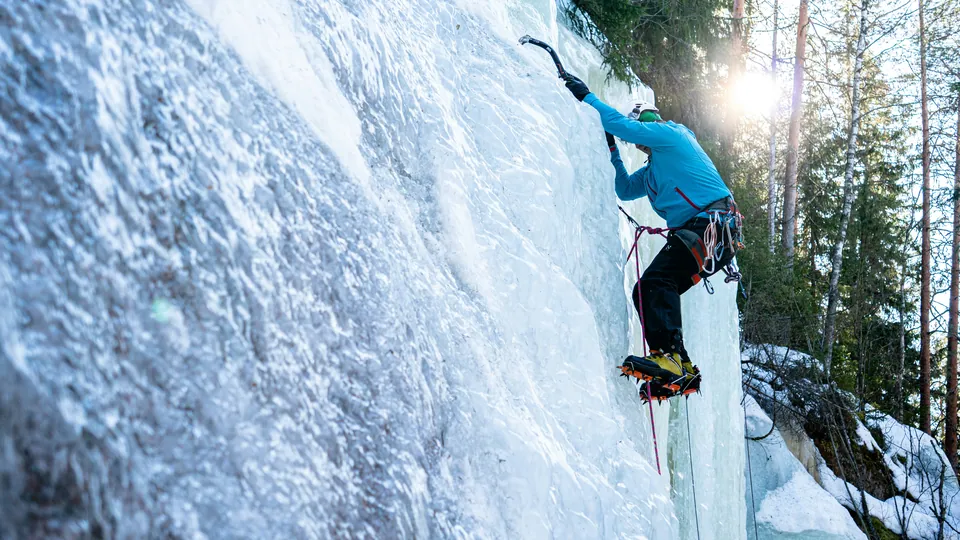
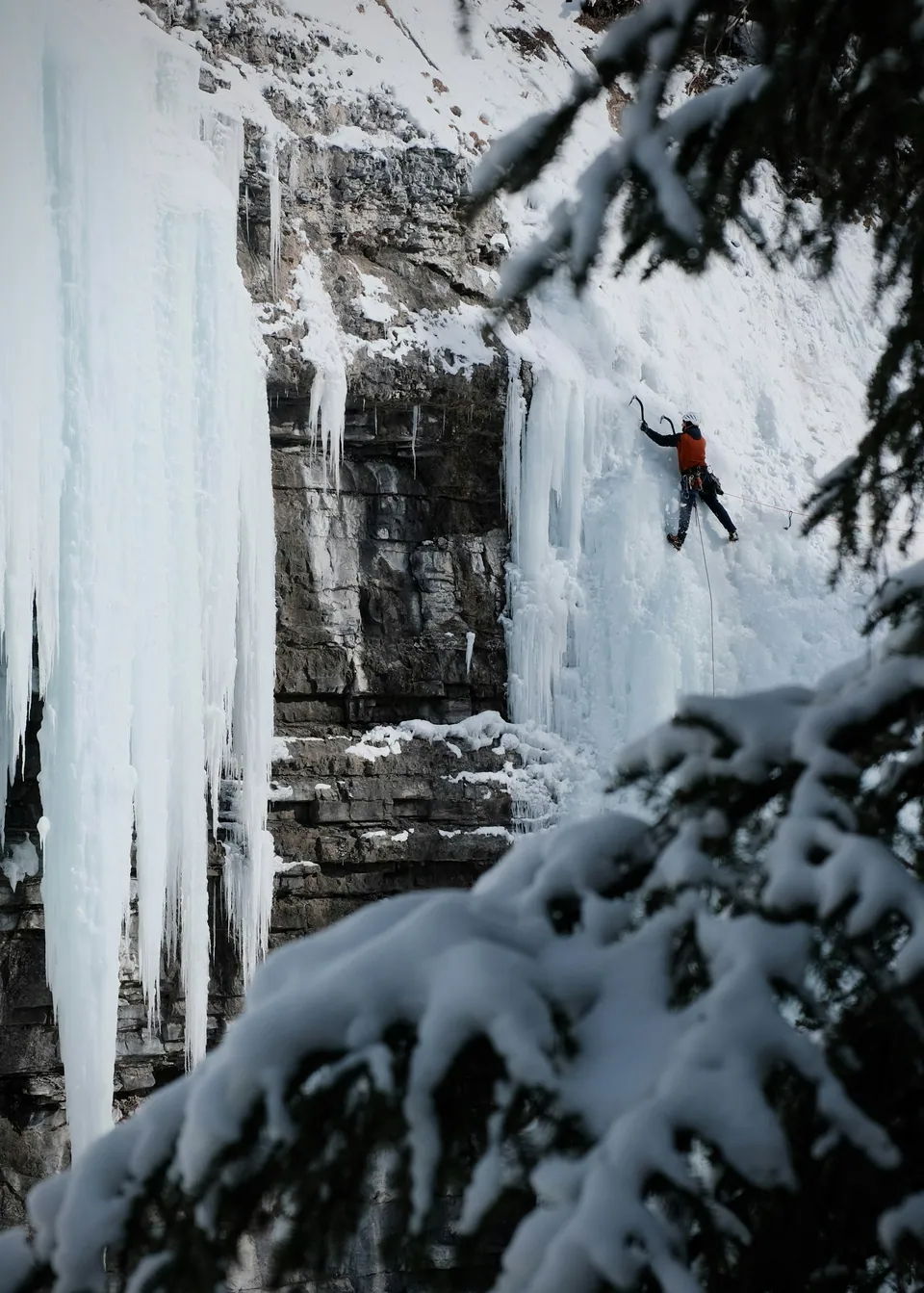
In winter, when the cold sets in, some of the waterfalls in the valley freeze into walls of blue ice. With crampons on your feet and an ice axe in each hand, you climb them roped up and belayed by a mountain guide. It's one of the most memorable winter activities, and it's open to beginners. Here's what a first outing involves: where, when, what kit you'll need and what affects the price. To plan the rest of your stay, see our guide to things to do in Chamonix.
What is ice climbing?
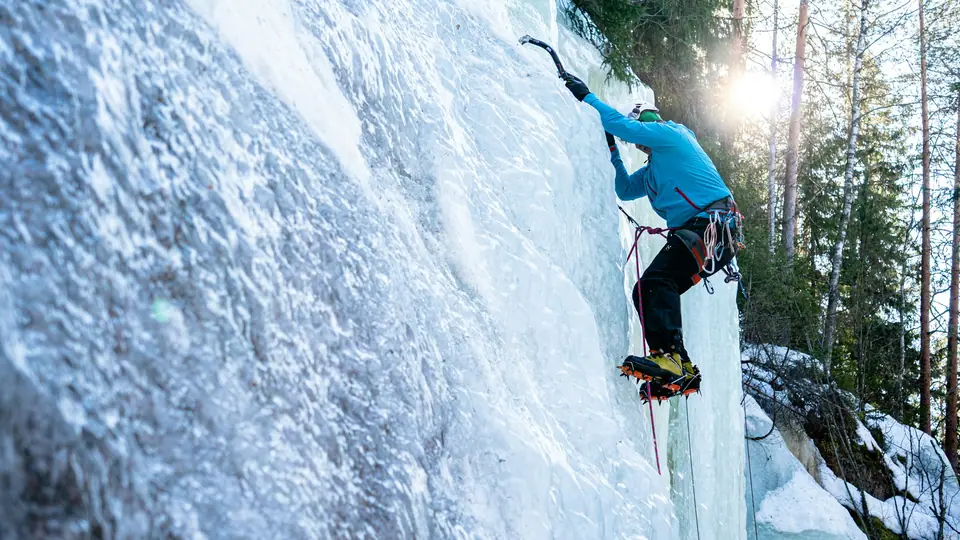
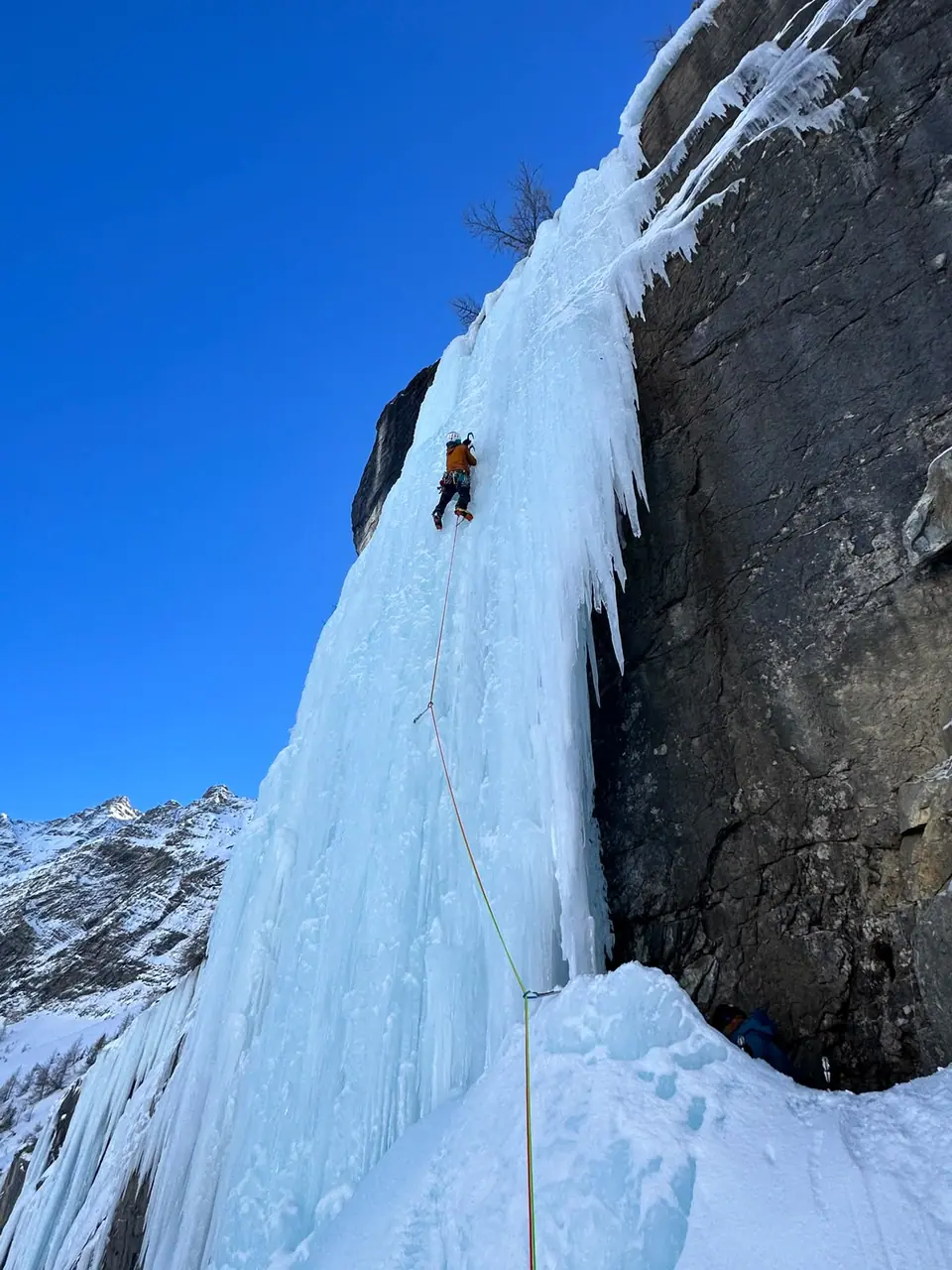
It's climbing on a frozen waterfall or an ice face. You move up using two curved ice axes, known as ice tools, which you swing into the ice, and crampons fitted to rigid boots. On an introductory outing you'll usually top-rope: the rope runs through a solid anchor at the top of the route, and the guide belays you from below. If you slip, the rope holds you straight away.
The ice changes from one day to the next with the temperature, the sun and its thickness. That's why the choice of site is always down to the guide.
Do you need a mountain guide to go ice climbing?
Yes. Ice climbing is part of the work of a mountain guide, who holds the state diploma in mountaineering (mountain guide). Their training, at the ENSA in Chamonix, takes 4 to 7 years according to Onisep, and covers climbing, summer and winter mountaineering and ski touring. A mountain leader can't take you ice climbing: their qualification excludes terrain that requires mountaineering equipment.
On the ice, the guide does three things you can't do on your own the first time:
they judge whether the waterfall is solid enough that day;
they spot the hazards around it, such as falling ice or snow built up above;
they set up and check the belay throughout the session.
To find out who is qualified to lead what in the mountains: Guide, accompagnateur, moniteur : qui fait quoi en montagne ?
Can you try ice climbing if you've never climbed before?
Yes. An introductory session is designed for beginners: you learn the technique at the foot of the waterfall. Having done a bit of climbing helps, but it isn't essential. What matters:
good physical fitness: your arms and calves work hard, and there's often an approach walk;
not being too bothered by heights;
being happy to have cold hands at times.
The minimum age depends on the guide. Depending on the school, group outings are open from age 15, with a parent present for under-18s. For a younger child, ask the guide about a private outing.
Where can beginners go ice climbing in Chamonix?
The Chamonix tourist office highlights one site suitable for beginners:
The Bérard waterfall, in Vallorcine, above the hamlet of Le Buet. It's an artificial waterfall, maintained by volunteers. Schools in the valley take their participants there from Le Buet, after a walk of about twenty minutes.
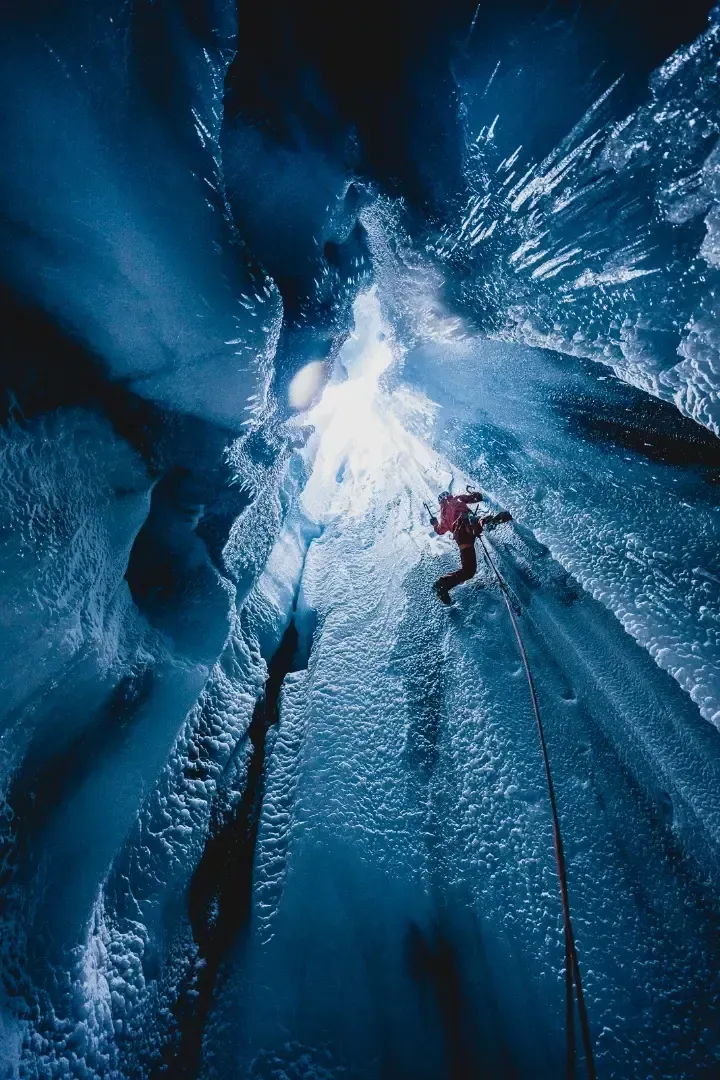
Rarer, and quite different, the Mer de Glace offers its own kind of terrain: moulins, the shafts carved out by meltwater, and ice walls in the heart of the glacier. This is where Jeff Mercier takes his clients on PEAKED.
In every case, the guide chooses the site on the day, depending on the cold, the condition of the ice and the avalanche risk.
What is the ice climbing season in Chamonix?
According to the tourist office, generally from late December to late February. Some schools run group outings several days a week during the season, depending on conditions. In mild winters, the season may start late or finish early.
On the Mer de Glace, climbing in the glacier's formations begins in autumn, when the cold freezes the meltwater, and can last until the end of winter. Jeff will give you the dates and glacier access when you write to him.
What does an introductory day involve?
Meeting at the spot set by the guide, often early (around 8:00 for some group outings), followed by the journey and the approach walk.
Kitting up at the foot of the waterfall: harness, helmet, crampons, ice axes. The guide checks every adjustment.
The basics: swinging the axe with a sharp flick of the wrist, kicking the front points of your crampons into the ice, keeping your heels low, and pushing up with your legs rather than pulling with your arms.
The climb: the guide sets up the rope, then you climb at your own pace. You'll usually do several climbs during the day, on increasingly steep slopes.
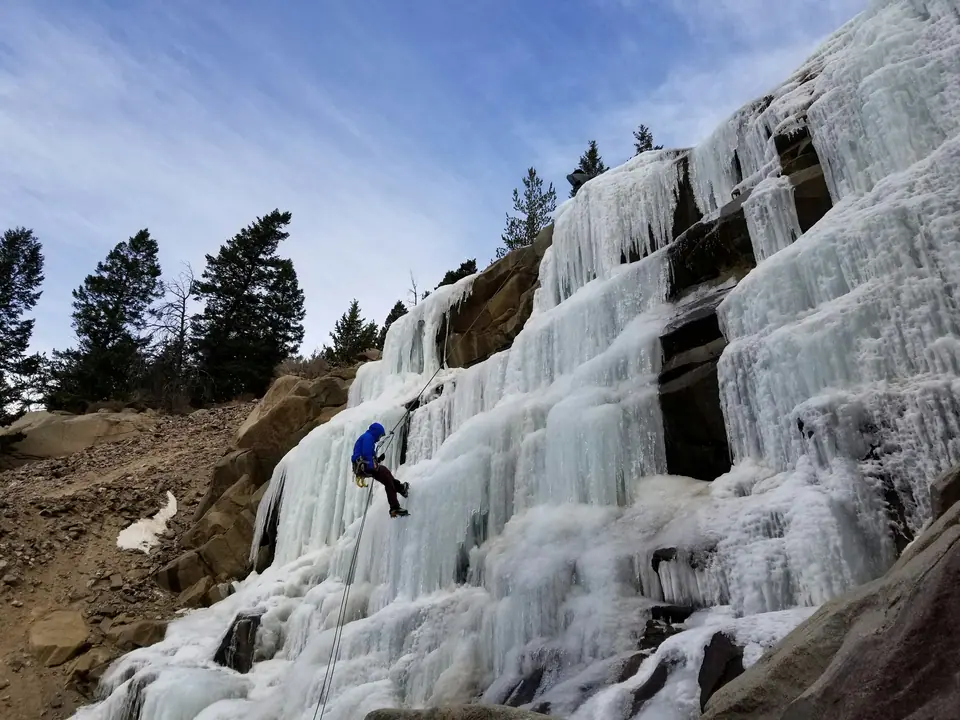
The descent, on a top rope: you sit back in your harness and the guide lowers you down.
What kit and clothing do you need?
Technical equipment (ice axes, crampons, harness, helmet) is provided by some guides and available to hire from others: ask when you book. Boots must be rigid and compatible with crampons. Soft walking boots aren't suitable. You can hire them from sports shops in Chamonix.
As for clothing:
several layers: a technical base layer, a fleece, a down jacket for breaks and a waterproof jacket;
mountain or ski trousers;
two pairs of gloves: a thin pair for climbing and a warm pair for breaks;
a thin hat that fits under the helmet, and sunglasses;
an insulated flask with a hot drink, and something to eat.
How much does an ice climbing outing in Chamonix cost?
The price depends on the format, group or private, the length, the number of people and the season. The valley's schools publish their prices on their websites, and on PEAKED, the price is shown on the outing's listing, service fee included. Here are the most common formats.
Group introduction (valley schools): Duration: Full day · Group and level: 3 to 4 per guide, beginners, from age 15 · Price: per person, shown on the school's website · Period: Late December to early March
Private guide: Duration: Half day · Group and level: 1 to 4 people · Price: for the group, shared between participants · Period: Depending on the ice
Private guide: Duration: Full day · Group and level: 1 to 4 people · Price: for the group, shared between participants · Period: Depending on the ice
Mer de Glace moulins with Jeff Mercier (PEAKED): Duration: 10 hours, with one night bivouacking · Group and level: Up to 2 people, good physical fitness · Price: per person, shown on the outing's listing, service fee included · Period: From autumn to the end of winter
Often not included: hire of personal equipment, boots, lifts or train, and meals. On a private outing, the price is set for the group: sharing the guide brings down the price per person.
Which ice climbing outing can you find on PEAKED?
On PEAKED, Jeff Mercier, a mountain guide based in Chamonix, offers climbing in the Mer de Glace moulins. You meet at Montenvers station. The programme includes an introduction to ice climbing in the glacier's formations, a night's bivouac on the moraine and a fondue at the edge of the ice in the evening.
The price, shown on the outing's listing, service fee included, covers the guide's services, dinner and the tent. You'll need to cover: lifts, hire of personal equipment, meals during the day, breakfast, sleeping bag and sleeping mat. Everything is set out in our article Escalade dans les moulins de la Mer de Glace.
For a simple introductory day on a waterfall, write to Jeff from his profile to find out what's possible during your stay. All the outings are gathered on the Cascade de glace page: message the pro from their profile to plan your outing.
What happens if it isn't cold enough?
The ice decides. If it's too thin or too wet, or if the avalanche risk is too high, the guide will change site, postpone the outing or suggest something else. Build a day or two of flexibility into your stay.
On PEAKED, if the pro cancels, because of the weather or for any other reason, you're refunded in full, service fee included. If you cancel yourself 48 hours or more beforehand, the price of the activity is refunded, excluding the service fee. If you cancel less than 48 hours beforehand, there is no refund.
To round off your week, take a look at our ideas for enjoying Chamonix in winter without skiing.
Frequently asked questions
Is ice climbing dangerous?
With a mountain guide, the risk is managed: they choose the site, check the ice and keep you belayed at all times. Never attempt a waterfall on your own without training.
Do you need to have climbed before?
No. An introductory session is designed for beginners. Good physical fitness matters more than experience.
What is the minimum age for ice climbing?
It depends on the guide. Depending on the school, group outings are open from age 15, with a parent present for under-18s.
How many people are there per guide?
Generally 3 to 4 on a group outing. Jeff Mercier's outing on PEAKED takes up to 2 people.
When can you go ice climbing in Chamonix?
Generally from late December to late February, sometimes until early March, depending on the cold.
How much does an introduction to ice climbing cost?
It depends on the format. In a group with one of the valley's schools, you pay for your place for the day. With a private guide, the price is set for the group, from 1 to 4 people, so it costs less per person when you share. The schools publish their prices on their websites. For Jeff Mercier's outing with a bivouac, the price is shown on the outing's listing on PEAKED, service fee included.
Outings to discover
 Ice climbing
Chamonix-Mont-Blanc · Northern Alps
Climbing in the moulins of the Mer de Glace
From €660 / person
 Ice climbing
Chamonix-Mont-Blanc · Northern Alps
Introduction to ice climbing
€550 for 1 to 4 people
 Hiking
Chamonix-Mont-Blanc · Northern Alps
Discover the ecosystems of our mountains
From €53.90 / person
From
17 Nov
 Snowshoeing
Chamonix-Mont-Blanc · Northern Alps
Snowshoe Hikes with Views of Mont Blanc *Private Outing*
€275 for 1 to 12 people
From
17 Nov
 Snowshoeing
Chamonix-Mont-Blanc · Northern Alps
Snowshoeing Under the Stars *Private Group Outing*
€297 for 1 to 12 people
From
17 Nov
 Hiking
Passy · Northern Alps
Tracking Mountain Wildlife
From €52 / person
From
17 Nov
 Climbing
 Alpine skiing
Chamonix-Mont-Blanc · Northern Alps
Vallée Blanche ski descent with a mountain guide
€611.60 for 1 to 4 people