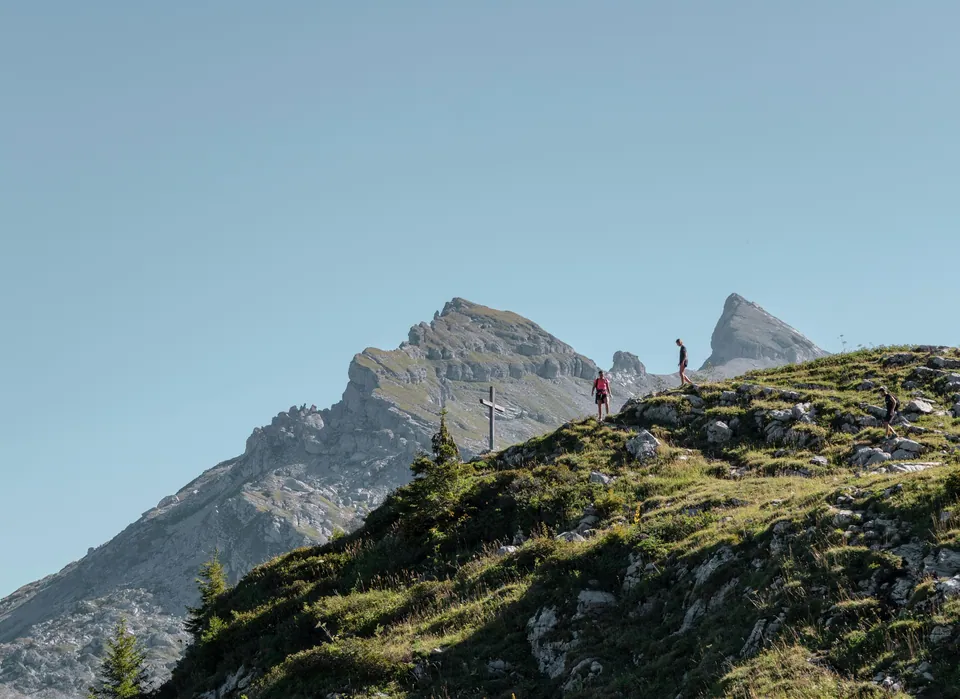
Hiking
The 10 best walks in Chamonix
Contents
- At a glance
- 1. Lac Bleu & Plan de l'Aiguille — the panoramic family stroll
- 2. Le Grand Balcon Nord — the traverse facing the Mer de Glace
- 3. Le Lac Blanc — the absolute must-do
- 4. Les Lacs des Chéserys — Lac Blanc without the crowds
- 5. Le Grand Balcon Sud — the ever-present balcony over Mont-Blanc
- 6. Le Brévent — the best viewpoint in the valley
- 7. L'Aiguillette des Posettes — the 360° viewpoint
- 8. Le Lac Cornu & les Lacs Noirs — high mountains without the crowds
- 9. La Mer de Glace & le Signal Forbes — up close with France's largest glacier
- 10. Le Refuge Albert 1er & le Glacier du Tour — a taste of the high mountains
- Practical tips for walking in Chamonix
- Do you need a mountain leader or a guide?
At the foot of the roof of Europe, the Chamonix-Mont-Blanc valley is home to some of the finest trails in the Alps. Mountain lakes mirroring glaciers, panoramic balcony paths facing the Mont-Blanc range, refuges perched beside the seracs: there's something for every level, from gentle family strolls to high-mountain routes.
We've picked the 10 unmissable walks in Chamonix, each with a practical fact file (distance, ascent, duration, level, starting point and best time of year) to help you plan your outing. And because the mountains don't forgive improvisation, we also explain when it's wiser to go with a professional.
At a glance
| # | Walk | Level | Ascent | Duration |
|---|---|---|---|---|
| 1 | Lac Bleu & Plan de l'Aiguille | Easy | ~150 m | 1h30 – 2h |
| 2 | Le Grand Balcon Nord | Moderate | ~100 m (+ descent) | 2h30 – 3h30 |
| 3 | Le Lac Blanc | Moderate | ~570 m | 3h30 – 4h |
| 4 | Les Lacs des Chéserys | Moderate | ~450 m | 3h |
| 5 | Le Grand Balcon Sud | Moderate | ~350 m | 3h – 4h |
| 6 | Le Brévent | Moderate to demanding | ~500 m | 3h – 4h |
| 7 | L'Aiguillette des Posettes | Moderate | ~740 m | 4h – 5h |
| 8 | Le Lac Cornu & les Lacs Noirs | Demanding | ~600 m | 5h |
| 9 | La Mer de Glace & le Signal Forbes | Variable | ~400 m | 3h – 4h |
| 10 | Le Refuge Albert 1er & le Glacier du Tour | Hard | 600 – 1,300 m | 5h – 7h |
Figures are approximate and vary depending on your starting point (on foot or by lift) and the variant you choose.
1. Lac Bleu & Plan de l'Aiguille — the panoramic family stroll
Easy · ~4 km · +150 m · 1h30 – 2h · Start: Plan de l'Aiguille (2,310 m) · June to October
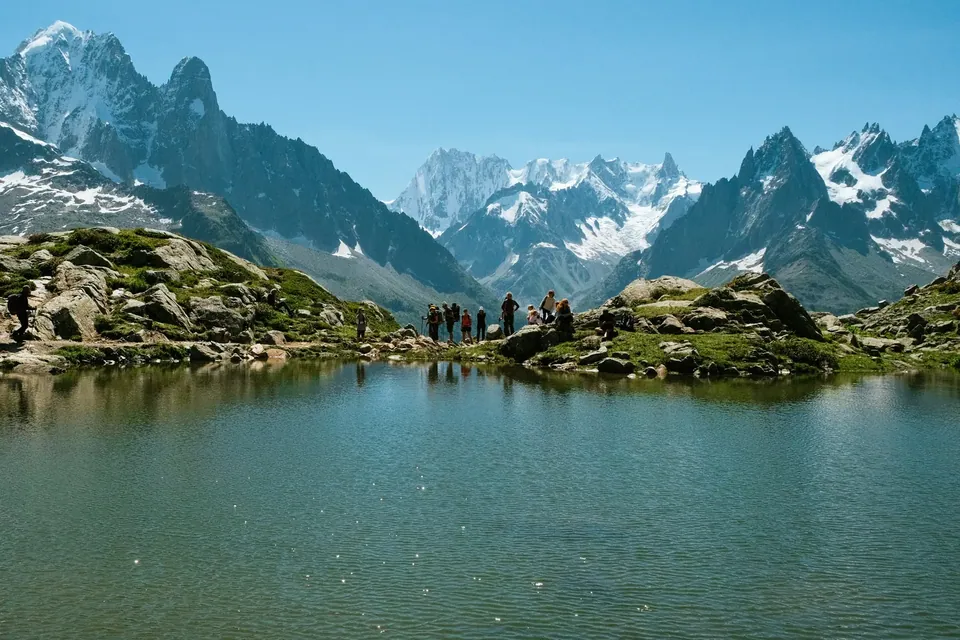
Perfect as a first warm-up or for a day out with children, this walk starts at the mid-station of the Aiguille du Midi cable car. With no real difficulty, it winds along the foot of the Aiguilles de Chamonix to the little Lac Bleu, a high-altitude mirror reflecting the peaks all around.
It's one of the few high-altitude walks you can do without major effort: ideal in hot weather, at the end of the day, or when you want the Mont-Blanc panorama without wearing yourself out. Do bring good footwear, though: the terrain is still mountainous.
2. Le Grand Balcon Nord — the traverse facing the Mer de Glace
Moderate · 7 to 10 km · +100 m / -500 m · 2h30 – 3h30 · Start: Plan de l'Aiguille (2,310 m) · July to mid-September
Considered one of the most beautiful trails in the valley, the Grand Balcon Nord links Plan de l'Aiguille to the Montenvers – Mer de Glace site (1,913 m). All the way along, you walk facing the Drus, the Grandes Jorasses and the vast river of ice below.
The route descends gently and ends perfectly with a visit to the Mer de Glace, before you ride the rack railway back down to Chamonix. The detour via the Signal Forbes (2,198 m) gives you one of the finest viewpoints over the glacier.
3. Le Lac Blanc — the absolute must-do
Moderate · ~8.5 km (return) · +570 m from La Flégère · 3h30 – 4h · Start: La Flégère (cable car) · Late June to October
You can't talk about walking in Chamonix without mentioning the Lac Blanc (2,352 m). Nestled in the Aiguilles Rouges Nature Reserve, this lake offers the most spectacular reflection of the Mont-Blanc massif in the whole valley. Unsurprisingly, it's the top-rated and busiest route in the area.
The easiest way is to take the cable car up to La Flégère, then follow a balcony path to the lake, passing the Lacs des Chéserys on the way. The more determined set off on foot from Les Praz (allow for over 1,500 m of ascent). Along the way you'll see marmots, eagles and fields of wild flowers. Start early to avoid the crowds and catch the perfect reflection in the early morning.
4. Les Lacs des Chéserys — Lac Blanc without the crowds
Moderate · ~7 km · +450 m · 3h · Start: La Flégère · July to September
On the way to the Lac Blanc, the Lacs des Chéserys make a superb alternative, often overlooked by those heading straight for the star lake. You get the same reflections of Mont-Blanc, in a much calmer atmosphere.
Stopping at the Chéserys means enjoying the same grand scenery of the Aiguilles Rouges Nature Reserve while avoiding the crowds higher up the trail. An excellent choice for photographers and anyone after some peace and quiet.
5. Le Grand Balcon Sud — the ever-present balcony over Mont-Blanc
Moderate · ~10 km · +350 m · 3h – 4h · Start: Planpraz or La Flégère (gondola) · July to September
The Grand Balcon Sud is the great traverse linking the Brévent area to La Flégère, across the slopes of the Aiguilles Rouges. The route stays between 2,000 and 2,500 m almost all the way, running along a balcon high above the valley.
Its great strength: the view of Mont-Blanc, its glaciers and its legendary peaks stays right in front of you for the whole walk. The ideal day is to go up to the Brévent, cross to La Flégère, then take the lift back down — maximum panorama for a reasonable amount of ascent.
6. Le Brévent — the best viewpoint in the valley
Moderate to demanding · ~8 km · +500 m · 3h – 4h · Start: Planpraz (1,999 m) · July to September
Perched at 2,525 m, the summit of the Brévent offers what many consider the finest panorama in Chamonix: a direct, full-length face-to-face with the Mont-Blanc massif, from the Aiguille du Midi to the Grandes Jorasses.
From Planpraz (reached by gondola from Chamonix), the trail climbs steadily to the summit. The effort of the ascent is more than rewarded at the top. It's also a favourite spot for paragliders, so there's a show guaranteed, in the sky and on the ground.
7. L'Aiguillette des Posettes — the 360° viewpoint
Moderate · 8 to 9 km · +740 m · 4h – 5h · Start: Col des Montets or Le Tour village · June to October
At the eastern end of the valley, the Aiguillette des Posettes (2,201 m) is a great classic that ticks every box: a well-marked trail, a reasonable amount of ascent, nothing technical, and above all an absolutely huge 360° panorama.
From the ridge, you take in the Mont-Blanc massif on one side and the Aiguilles Rouges on the other, with the Glacier du Tour and the Émosson dam as a backdrop. Suitable for families with children from 8-10 years old, it passes through forests, mountain pastures and old slate quarries. Take at least 1.5 L of water: there's nowhere to refill along the route.
8. Le Lac Cornu & les Lacs Noirs — high mountains without the crowds
Demanding · ~10 km · +600 m · 5h · Start: Planpraz (1,999 m) · Mid-July to September
If you're after a high-mountain atmosphere far from the crowds at the Lac Blanc, the Lac Cornu (2,427 m) and the Lacs Noirs are a real gem. Tucked into a wild rocky cirque in the Aiguilles Rouges Reserve, they have to be earned with a more committing route.
The area remains surprisingly quiet, even though it's as easy to reach by lift as the Lac Blanc. A real option for experienced walkers looking for solitude and rugged mineral landscapes.
9. La Mer de Glace & le Signal Forbes — up close with France's largest glacier
Variable · 6 to 10 km · ~400 m · 3h – 4h · Start: Montenvers (train) or Plan de l'Aiguille · July to September
The Montenvers site (1,913 m), reached by the legendary rack railway, looks out over the Mer de Glace, France's longest glacier. You can simply enjoy the view from the terrace, or continue to the Signal Forbes for a wilder viewpoint, connecting with the Grand Balcon Nord.
It's also a walk that stays with you: the signs along the descent to the ice cave show, year after year, just how dramatically the glacier is retreating. An outing that is as thought-provoking as it is contemplative.
10. Le Refuge Albert 1er & le Glacier du Tour — a taste of the high mountains
Hard · 8 to 12 km (return) · +600 to 1,300 m depending on the start · 5h – 7h · Start: Le Tour, Charamillon or Les Autannes · Mid-July to mid-September
To finish in style, head for the Refuge Albert 1er (2,702 m), set on the moraine of the Glacier du Tour. It's the only CAF refuge in Chamonix you can reach in summer without walking on a glacier, which makes it a great goal for getting a feel for the high mountains.
The ascent varies a lot depending on where you start: about 1,300 m from Le Tour village (steep), 930 m from Charamillon, or 600 m from Les Autannes if you use the lifts. At the refuge, a breathtaking glacial panorama opens up before you.
⚠️ Important: the walk ends at the refuge. Venturing onto the Glacier du Tour itself is mountaineering (crevassed terrain, equipment and roping up are compulsory) and absolutely requires a mountain guide.
Practical tips for walking in Chamonix
The best time to go. High-altitude trails clear of snow between late June and early July, and stay passable until October depending on snowfall. The height of the season (mid-July to late August) offers the best conditions… but also the most people.
Start early. It's the golden rule in Chamonix: steadier weather in the morning, wonderful light, fewer people on the trails, and above all a safety margin against afternoon thunderstorms, which are common in the mountains in summer.
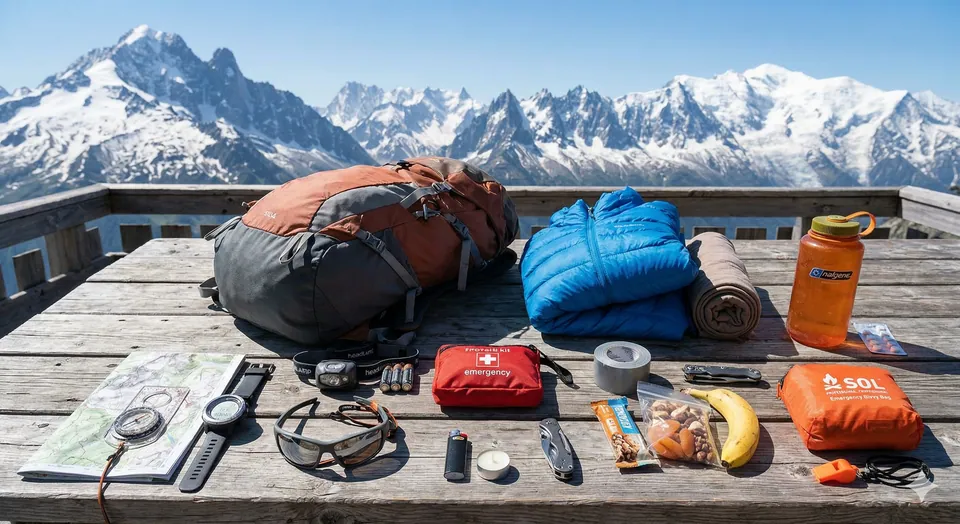
Basic equipment. High-cut walking boots, layers of clothing (it can be 15 °C colder on a summit than in the valley), a windproof jacket, sun cream, sunglasses, a hat, and at least 1.5 L of water per person — many routes have nowhere to refill. As for your rucksack, a good rule of thumb is that it should never weigh more than 20% of your body weight. To make sure you forget nothing, follow our checklist of the 10 rucksack essentials for mountain walking.
Respect the Aiguilles Rouges Nature Reserve. Many routes (Lac Blanc, Chéserys, Lac Cornu, Grand Balcon Sud) pass through it: dogs are not allowed, even on a lead, picking plants is forbidden, and bivouacking is regulated. Stick to the trails to protect the exceptional wildlife and flora.
Do you need a mountain leader or a guide?
Many of these walks can be done independently if you're well prepared. But going with a professional changes the experience — and sometimes it's essential:
- A mountain leader (AMM) knows the trails, reads the weather, adapts the route to your level and shares their knowledge of the environment (wildlife, flora, geology). Ideal for building confidence, discovering variants off the beaten track or walking with the family with peace of mind.
- A mountain guide becomes essential as soon as you move onto glacial terrain or into mountaineering, such as on the Glacier du Tour from the Refuge Albert 1er.
We go into everything a mountain leader really brings — routes away from the crowds, safety, family outings, prices — in our article guided walking in Chamonix: why go with a mountain leader (AMM).
On Peaked, you book an independent professional from the Chamonix valley directly, in just a few clicks. You choose who goes with you, with complete transparency — and you support local mountain professionals.
Automatically translated from French.
Frequently asked questions
What is the most beautiful walk in Chamonix?
The Lac Blanc is regularly named the most beautiful and most iconic, for its reflection of Mont-Blanc. For pure panorama, the Brévent and the Aiguillette des Posettes are strong rivals.
Can you walk in Chamonix with children?
Yes. The Lac Bleu, the Aiguillette des Posettes (from 8-10 years old) and the Lac Blanc via the cable car are all suitable for families. Choose short routes with lift access to keep the effort down.
When is the best time to walk in Chamonix?
The season runs from late June to October. The best balance between weather and crowds is often in June and early July, and in September, when the trails are clear but less busy.
Do you need to book a guide to walk in Chamonix?
Not for the classic waymarked trails, which can be done independently. However, a mountain leader adds safety and discovery, and a mountain guide is compulsory as soon as the route crosses a glacier.
Book your experience
 Nature discovery New
Chamonix-Mont-Blanc · Northern Alps
Discover the ecosystems of our mountains
From €53.90 / person
 Paragliding New
Chamonix-Mont-Blanc · Northern Alps
Paragliding flight from the Plan de l'Aiguille
From €176 / person
 Paragliding New
Chamonix-Mont-Blanc · Northern Alps
Tandem paragliding flight with views of Mont-Blanc
From €165 / person
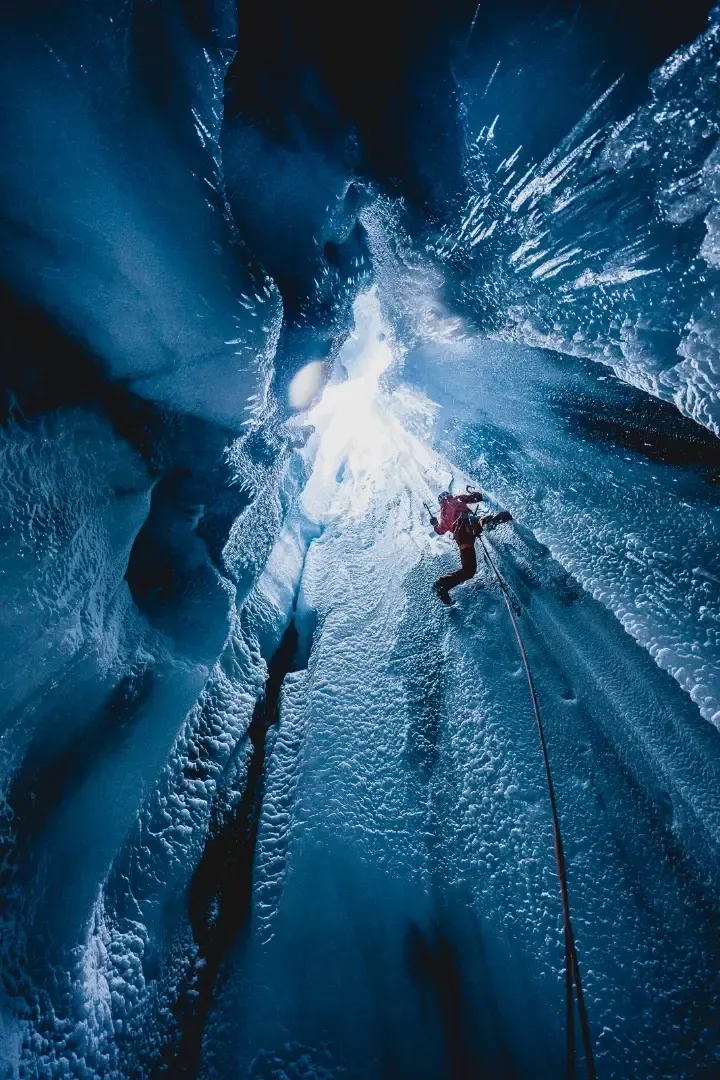 Ice climbing New
Chamonix-Mont-Blanc · Northern Alps
Climbing in the moulins of the Mer de Glace
From €660 / person
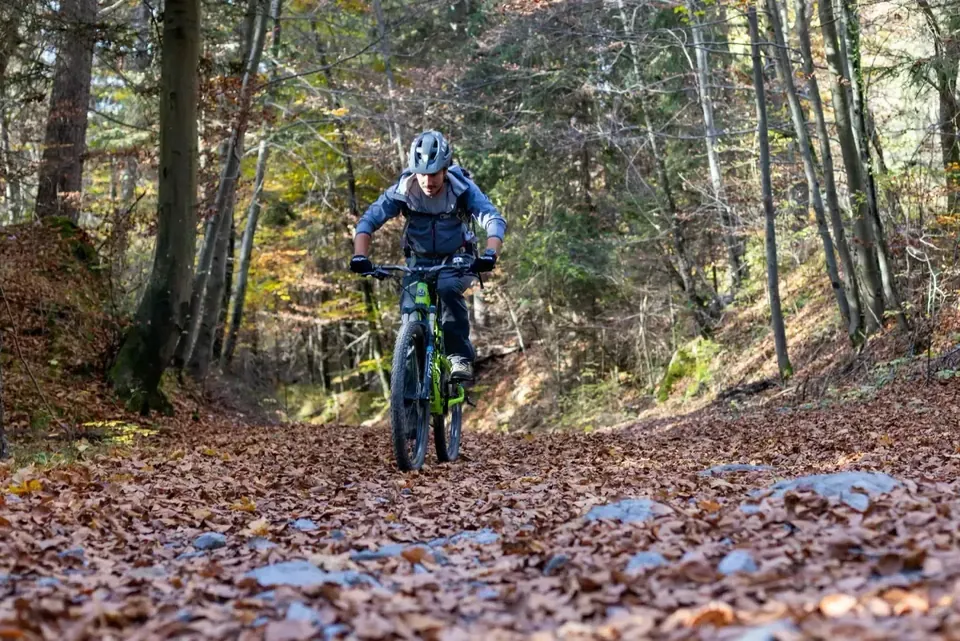 Mountain biking New
Chamonix-Mont-Blanc · Northern Alps
Mountain bike skills course in Chamonix
From €152.90 / person