Snowshoeing
Snowshoeing in Chamonix: trails, season, prices and guided hikes
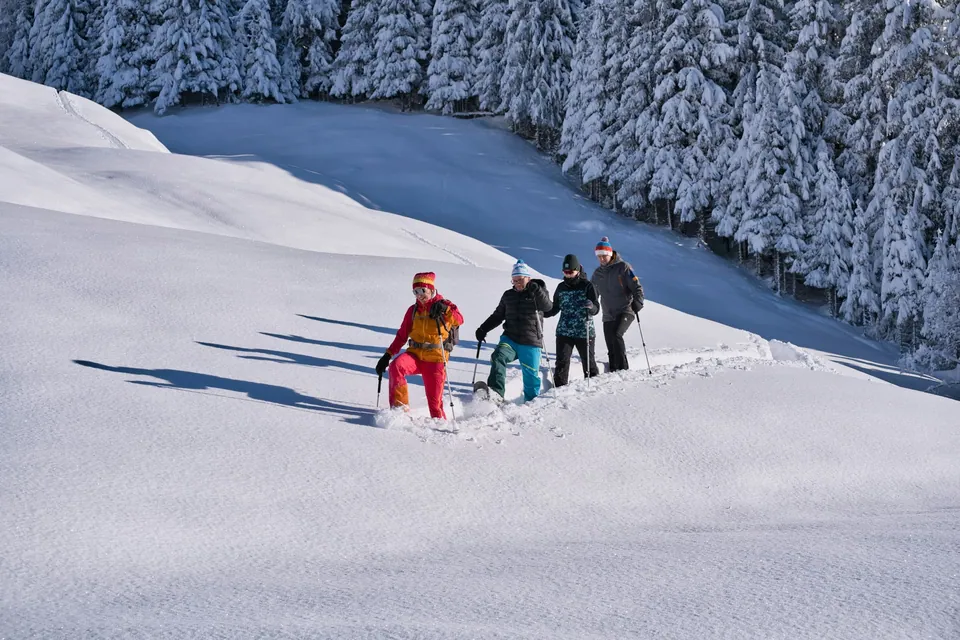
Snowshoeing in Chamonix is possible from December to early April, depending on snow cover, on forest and pasture trails that anyone who walks regularly can manage. A 3 to 4 hour half-day with a mountain leader can be in a group or private, with snowshoes and poles often provided, so you can simply enjoy the finest snowy landscapes.
Contents
- Do you need to be sporty to go snowshoeing?
- Why go with a mountain leader?
- Where can you go snowshoeing around Chamonix?
- When is the best time to go snowshoeing in Chamonix?
- What is the minimum age for snowshoeing?
- What happens on a snowshoeing outing?
- What should you pack?
- How much does a snowshoeing outing in Chamonix cost?
- Can you go snowshoeing with a PEAKED professional?
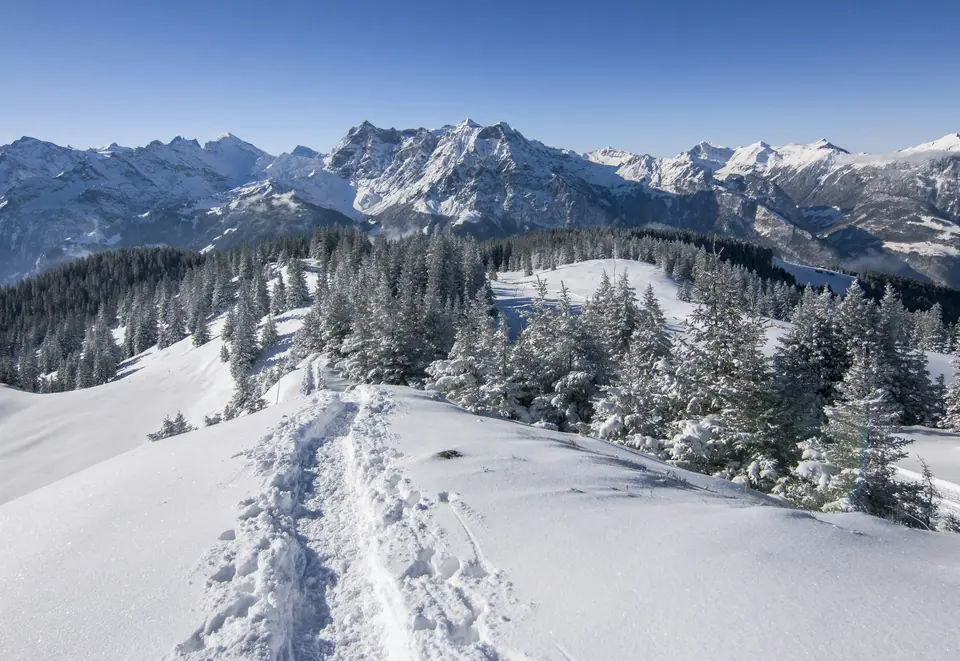
You don't need to ski to enjoy the snow. On snowshoes, you walk through forest or along high balconies facing Mont-Blanc, far from the noise of the pistes. It's a great outing for families, non-skiers, or a rest day between two days on the slopes. Here's where to go, when, with whom and what affects the price. Snowshoeing is just one way to discover the valley: find the others in our guide to things to do in Chamonix.
Do you need to be sporty to go snowshoeing?
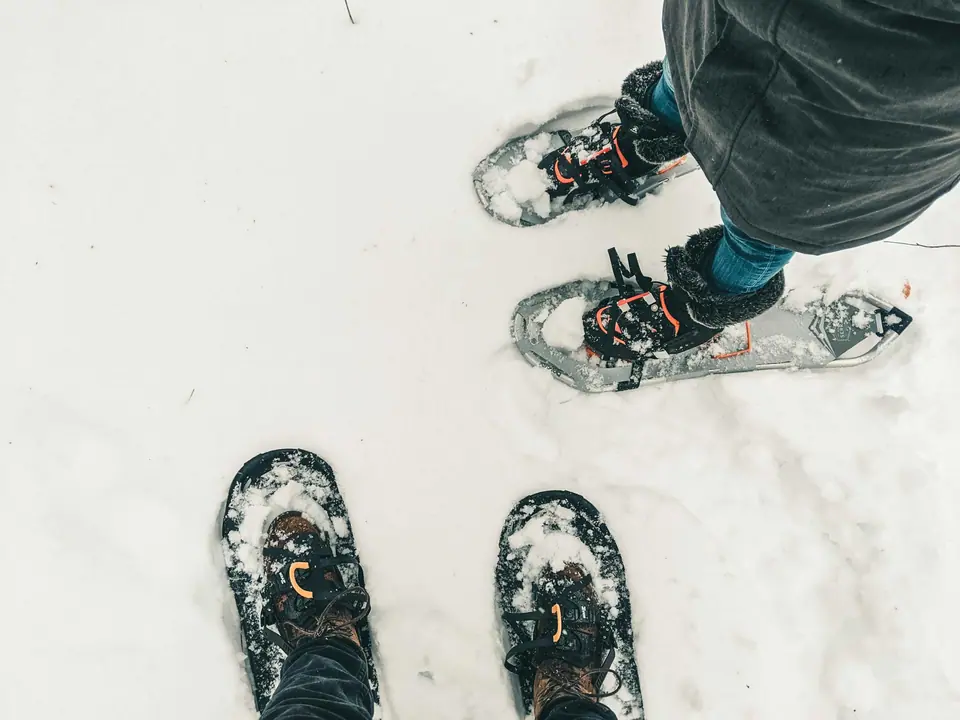
No. If you can walk, you can snowshoe. The snowshoe spreads your weight across the snow so you don't sink in, and the crampons under your foot grip on the climbs. You walk with your legs slightly wider apart than usual, and poles help you keep your balance.
How much effort it takes depends on the route. A one-hour loop in the forest stays gentle. A climb up to an alpine pasture in fresh snow takes more breath. A half-day introductory outing with a mountain leader usually involves 2 to 2.5 hours of walking, out of 3 to 4 hours in total.
Why go with a mountain leader?
A mountain leader is a hiking professional. Their state diploma in mountaineering (mountain leader, moderate terrain) qualifies them to lead you on snow, over rolling terrain without significant hazards. In winter, they can lead snowshoeing, but not skiing. Glaciers and mountaineering sections are off limits to them. Their training takes 3 to 5 years according to Onisep, and they complete refresher training every six years.
Three things change when you go with one:
Safety: they read the avalanche risk bulletin, published by Météo-France for each mountain range on a scale of 1 to 5, and choose a route suited to the day.
The route: they know the quiet corners and adjust the distance to the pace of the group, children included.
Discovery: animal tracks, winter wildlife and plants, the history of the hamlets, reading the landscape.
To find out more about the profession: Randonnée guidée à Chamonix : pourquoi partir avec un AMM ? and Guide, accompagnateur, moniteur : qui fait quoi en montagne ?
Where can you go snowshoeing around Chamonix?
The tourist office waymarks snowshoe routes in the valley. A few examples:
Le sentier des Cerfs, in Les Houches: a waymarked 3.4 km loop, about 1 hour 10 minutes with 150 m of ascent, starting at the second bend above Les Houches station. Deer are often spotted here.
Le Petit Prarion, in Les Houches: a short 1.4 km loop, about 1 hour with 100 m of ascent, at the top of the Prarion gondola. A return ticket is compulsory.
The Balme snowshoe trail, above Argentière: from the village of Le Tour, the Charamillon gondola and then the Autannes chairlift take you to the start of a 2 km waymarked trail at almost 2,200 m, on the path towards Switzerland. Enjoy views over the Chamonix valley and the Mont-Blanc massif, then of the Emosson dam at the end. A return lift ticket is compulsory. Open during the winter season depending on snow cover, during lift opening hours.
The Argentière moraine, no snowshoes needed: a groomed footpath starts in the centre of Argentière and follows the moraine to Les Grassonnets on yellow waymarks alongside the cross-country ski tracks. Easy, about 2 hours 30 minutes, with the option of coming back by bus. On the way, the beginner slopes at Les Chosalets make a fun stop for snowtubing.
La boucle des Granges, in Vallorcine: starting from the Buet car park, in a forest of larches and spruces.
Les Posettes, in Vallorcine: from the top of the Vallorcine gondola towards the Aiguillette des Posettes, about 1 hour 30 minutes return, with fuchsia waymarks. Graded difficult.
A mountain leader can also take you on quieter routes, chosen on the day depending on snow conditions. Before heading off alone on a waymarked route, check with the tourist office or the Office de Haute Montagne in Chamonix that it is open.
When is the best time to go snowshoeing in Chamonix?
From December to early April, as soon as there is enough snow. Waymarked routes open and close depending on snow cover: check the dates for each route on the tourist office website, for example for le Petit Prarion. Guided outings follow the same calendar.
During the Christmas and February holidays, snowshoeing offers a real break away from the pistes. Mountain leaders are in high demand then, so book as soon as your dates are fixed.
Some outings also take place at dusk. For example, schools in the valley offer an evening outing, starting at 18:00. Remember to bring a head torch.
What is the minimum age for snowshoeing?
It depends on the professional and the route. Depending on the school, group outings are open from age 12, with a parent. For a private outing, ask your mountain leader what they accept: they can shorten the loop and add more breaks. Tell them the children's ages when you book.
On an easy waymarked route, such as the sentier des Cerfs, a family can also walk on their own in good weather, as long as they stay on the trail.
What happens on a snowshoeing outing?
Meeting point: meet at the place given by your mountain leader. Depending on the option, a transfer to the start is included.
Equipment: snowshoes and poles are often provided. Your mountain leader will help you adjust the bindings to fit your boots.
The walk: 2 to 2.5 hours of walking for a half day, at your own pace, with stops to look around and take photos.
The return, sometimes with a stop at a mountain hut or chalet, depending on the outing you choose.
What should you pack?
waterproof, high-ankle hiking boots;
layers of clothing, a waterproof jacket, gloves and a hat;
sunglasses and sun cream: snow reflects light strongly;
a water bottle, ideally with a hot drink, and a snack;
a head torch for an outing at the end of the day.
To find out more: Le sac à dos : les 10 indispensables pour randonner en montagne.
How much does a snowshoeing outing in Chamonix cost?
The price depends on the format, group or private, the number of outings and the number of people. The valley's schools publish their prices on their websites. Here are the most common formats:
Group half day: Duration: 3 to 4 hours, including 2 to 2.5 hours of walking · Level: Easy, from age 12 · Price: per person, on the schools' websites · Season: December to early April
Three group half days: Duration: 3 outings of 3 to 4 hours · Level: Easy, from age 12 · Price: per person, for all three outings · Season: December to early April
Private half day: Duration: 3 to 4 hours · Level: Adapted to the group · Price: for the group, depending on the number of people (up to 8) · Season: Depending on snow
Waymarked route, no professional: Duration: 1 to 1.5 hours · Level: Easy to difficult · Price: Free, plus the lift if needed · Season: Depending on opening
For a private outing, the price is set for the group: the more of you there are, the less it costs per person, with a route chosen for you. What is generally not included: boots, lifts and the snack.
Can you go snowshoeing with a PEAKED professional?
Yes. Valérie Dubois Delplanque, a mountain leader, offers several outings on PEAKED: À la recherche d’une victime d’avalanche (meeting in Sallanches, 3 hours, from age 10), La montagne en hiver in Megève (3 hours, from age 6) and Raquettes au crépuscule in Megève (2 hours, from age 6). The price of each outing is shown on its listing, service fees included. Message her from her profile.
Alex Bruneau, a professional based in Chamonix, lists snowshoeing among his specialities, along with hiking, mountain biking and nature discovery. His professional card and his professional liability insurance have been checked by PEAKED, and Alex speaks French and English.
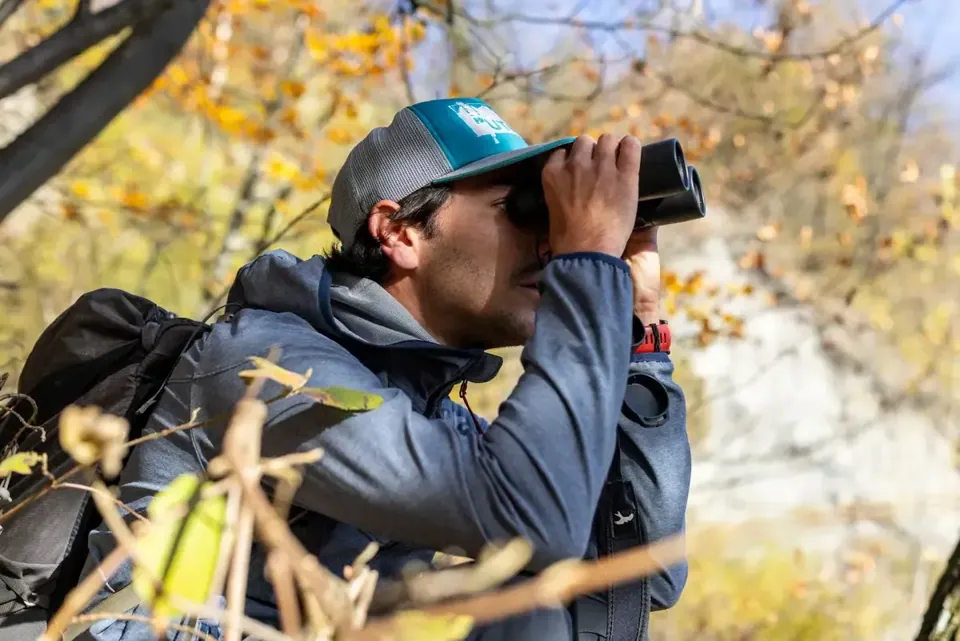
His nature outing À la découverte des écosystèmes de nos montagnes gives an idea of his approach: 1 hour, up to 8 people, with landscape reading, plant observation and a search for signs of wildlife. The price is shown on the outing's listing, service fees included.
For a snowshoeing outing with Alex, message him from his profile to find out his winter dates. You'll find more ideas for the valley in our article Que faire à Chamonix en hiver sans skier.
Frequently asked questions
Do you need to be sporty to go snowshoeing?
No. An introductory outing is suitable for anyone who walks regularly. Allow 2 to 2.5 hours of walking for a half day.
Can you go snowshoeing with children?
Yes. Depending on the school, group outings are open from age 12 with a parent. On a private outing, your mountain leader will adapt the route and pace: ask them for the minimum age.
Is there a risk of avalanche when snowshoeing?
Yes, as soon as you leave the safe routes. Your mountain leader checks the Météo-France avalanche bulletin and chooses a route suited to the conditions on the day.
How much does a snowshoeing outing in Chamonix cost?
It depends on the format. In a group, you pay for your place for the half day, with snowshoes and poles often provided. On a private outing, the price is set for the group and costs less per person when you share. The valley's schools publish their prices on their websites, and on PEAKED, the price is shown on the outing's listing, service fee included.
When is the best time to go snowshoeing in Chamonix?
From December to early April, depending on snow cover. Waymarked routes open and close with the snow.
Who can lead a snowshoeing outing?
A mountain leader, for whom it is a profession: their state diploma qualifies them to lead snowshoeing on rolling terrain, away from glaciers.
Outings to discover
 Hiking
Chamonix-Mont-Blanc · Northern Alps
Discover the ecosystems of our mountains
From €53.90 / person
From
17 Nov
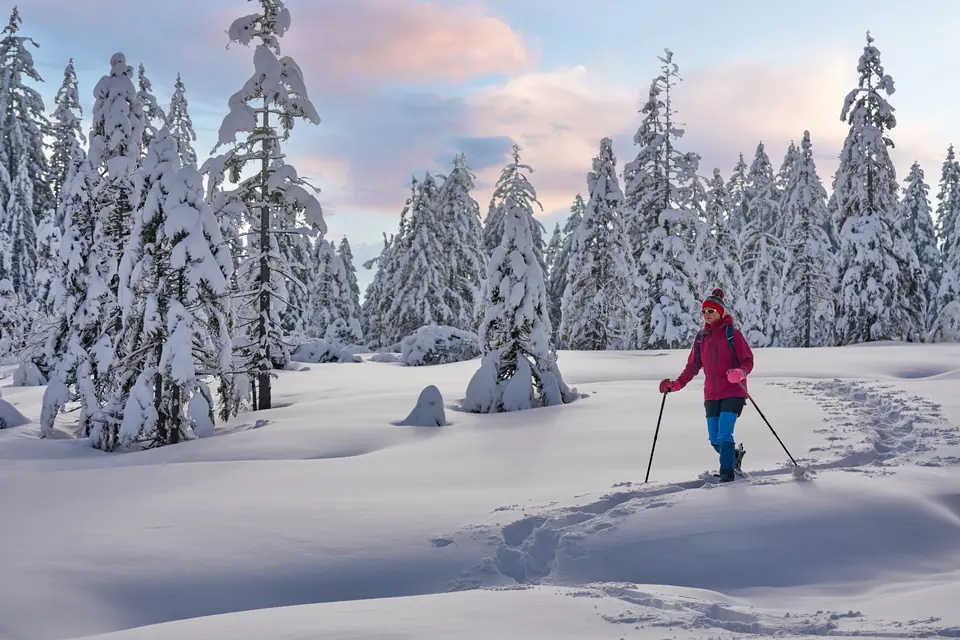 Snowshoeing
Chamonix-Mont-Blanc · Northern Alps
Snowshoe Hikes with Views of Mont Blanc *Private Outing*
€275 for 1 to 12 people
From
17 Nov
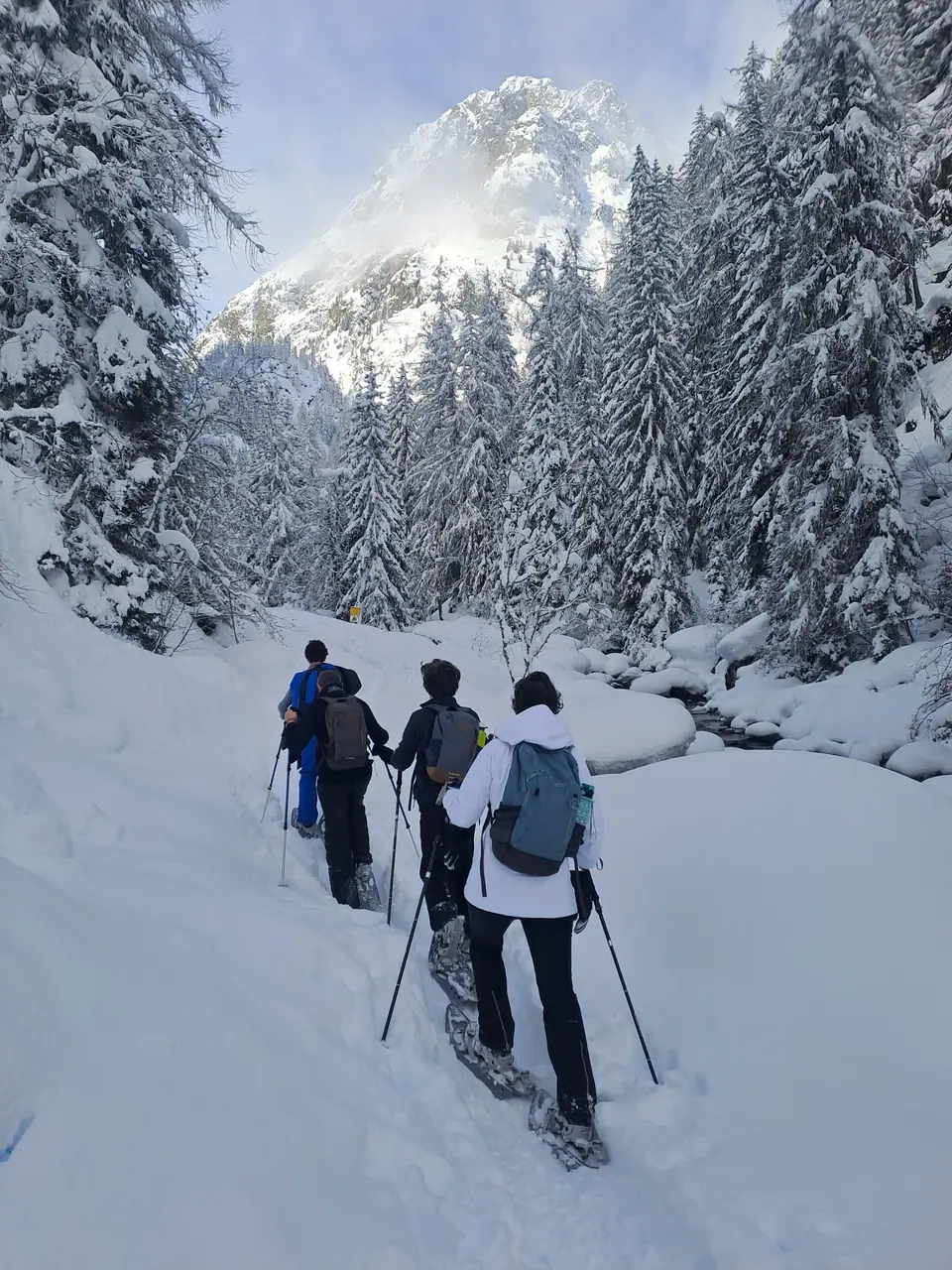 Snowshoeing
Chamonix-Mont-Blanc · Northern Alps
Snowshoeing Under the Stars *Private Group Outing*
€297 for 1 to 12 people
From
17 Nov
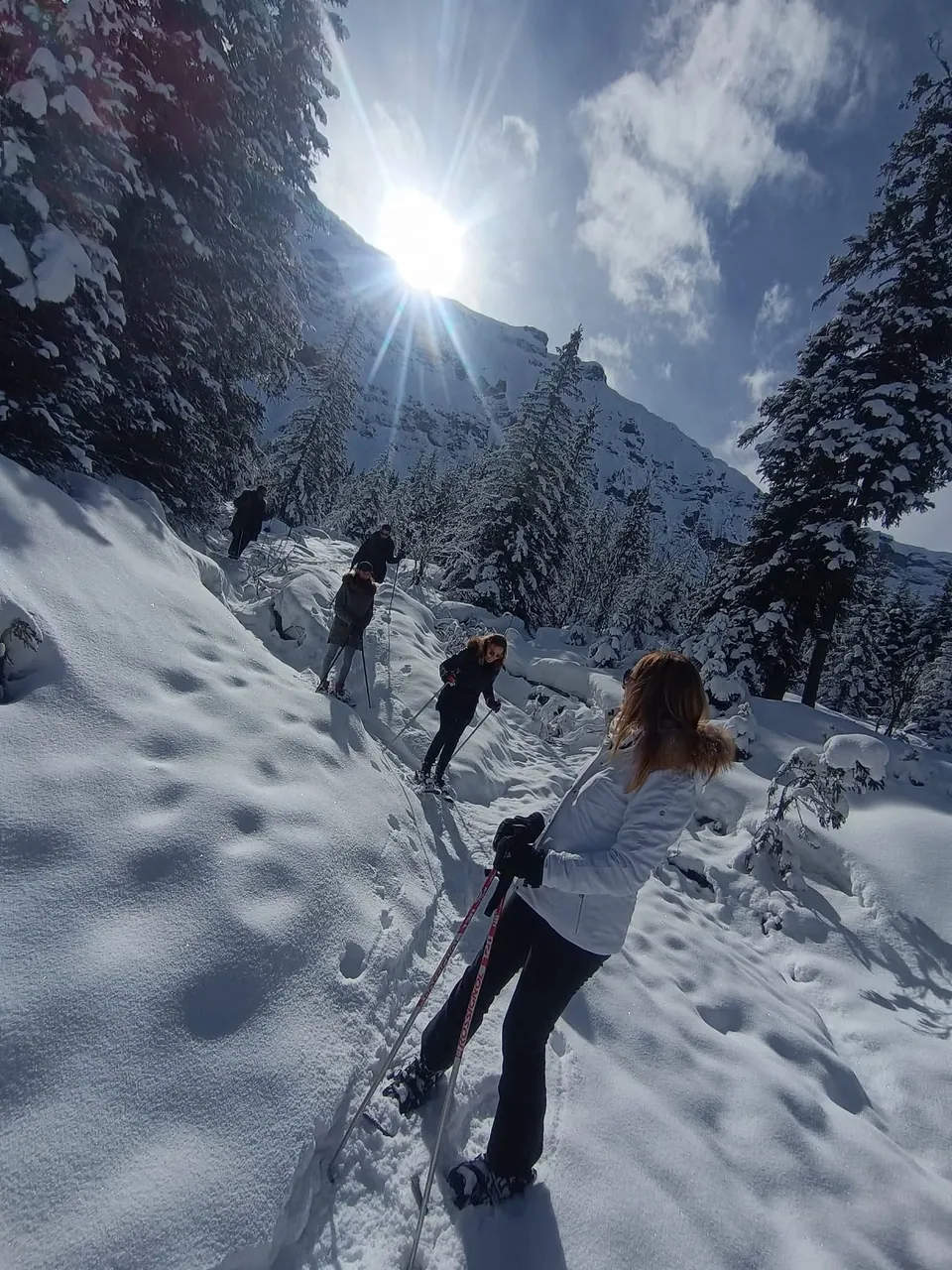 Snowshoeing
Chamonix-Mont-Blanc · Northern Alps
Searching for an avalanche victim
From €59 / person
From
5 Dec
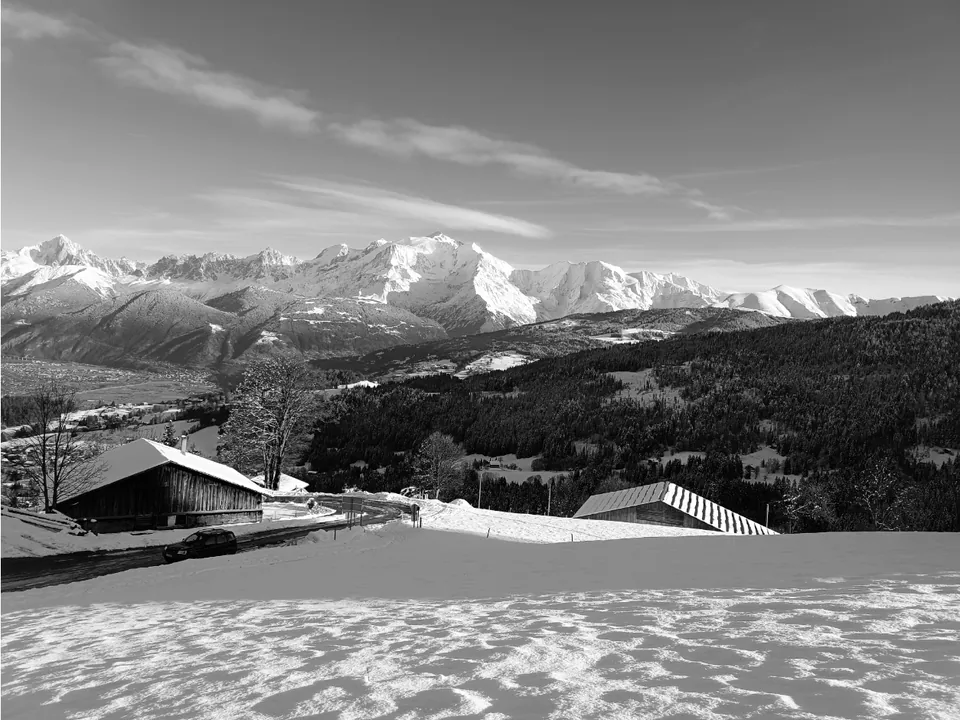 Snowshoeing
Megève · Northern Alps
Winter in the mountains
From €57 / person
From
5 Dec
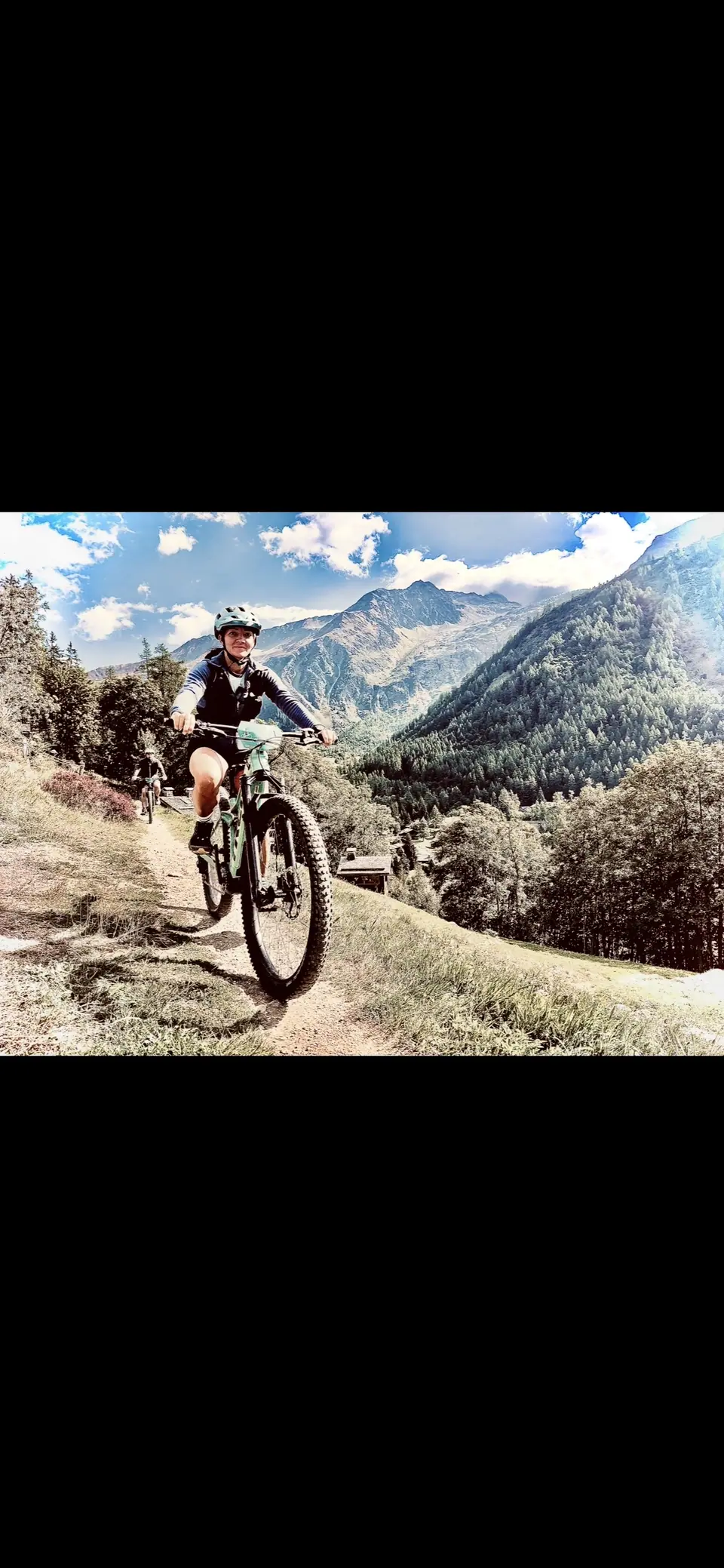 Mountain biking
Chamonix-Mont-Blanc · Northern Alps
Guided mountain bike outing – Discover the trails of Chamonix
From €110 / person
From
16 Nov
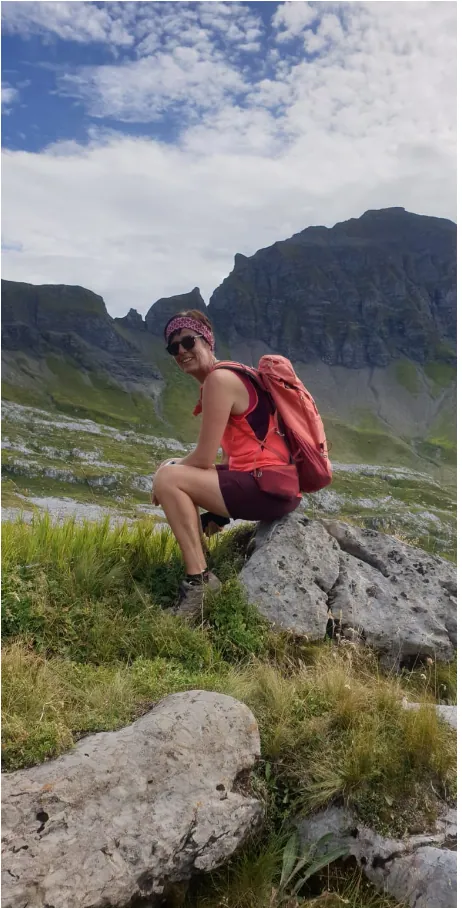 Nature discovery
Sallanches · Northern Alps
Mountain Survival
From €57 / person
From
17 Nov
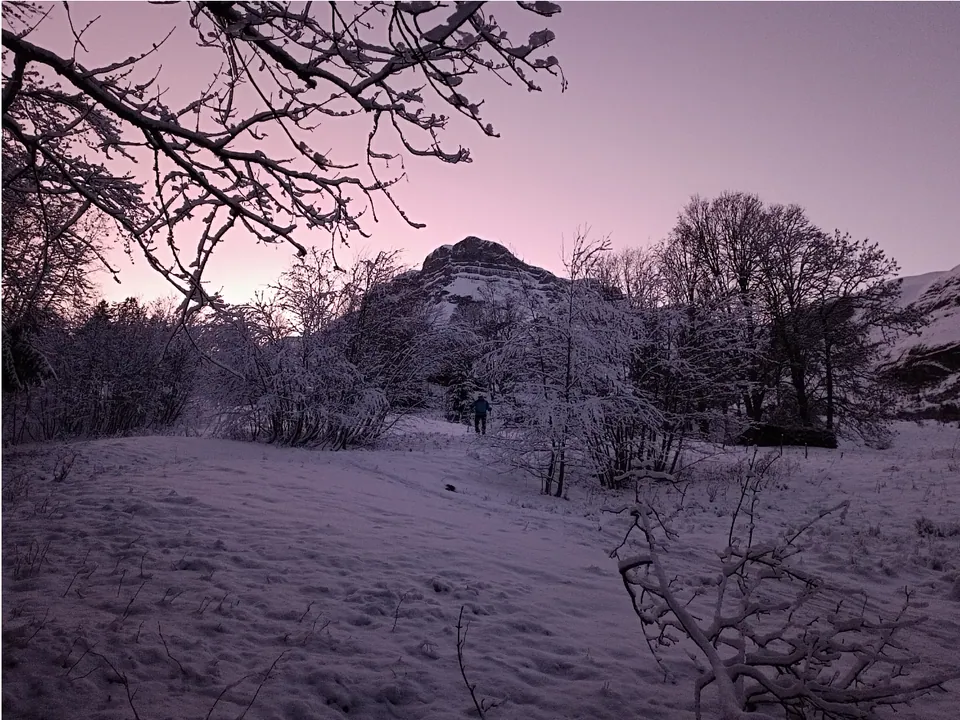 Snowshoeing
Megève · Northern Alps
Snowshoeing at Dusk
From €42 / person
From
5 Dec