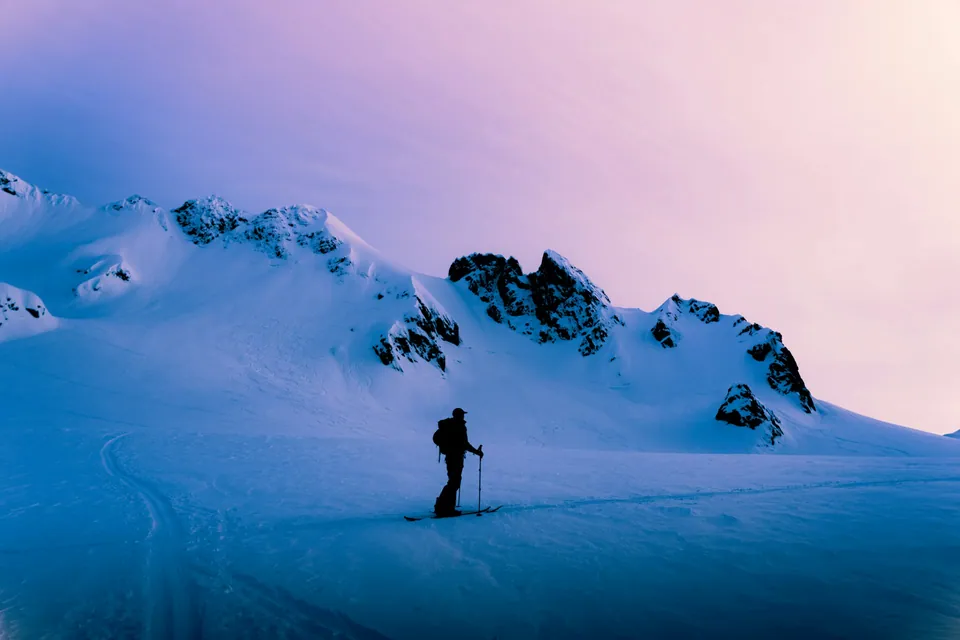
Ski touring
Ski touring in Chamonix: a beginner's guide
In Chamonix, the easiest way to start ski touring is a guided introduction, for a day or a half-day, with a high mountain guide or a ski instructor. You just need to be a confident skier, and the marked uphill routes at Les Houches and Le Tour let you practise skinning on the ski area. Kit and hire, your first real outing and safety: here's everything you need to get off to a good start.
Contents
- What is ski touring?
- How good a skier do you need to be for ski touring?
- What kit do you need, and where can you hire it in Chamonix?
- Can you skin up the pistes in Chamonix?
- Where should you go on your first ski tour in Chamonix?
- Do you need a mountain guide or a ski instructor for ski touring?
- What goes into the price of a ski touring introduction in Chamonix?
- How do you manage avalanche risk in Chamonix?
- How do you find your pro on PEAKED?
- What should you remember before your first ski tour?
Ski touring means climbing on skis, with skins stuck to the bases, then skiing down, often far from the lifts. The Chamonix valley has no shortage of terrain, but snow and avalanche conditions change from one day to the next. Here's the level you need, the kit to hire, where to practise, what a guided introduction includes and how to manage the risk.
What is ski touring?
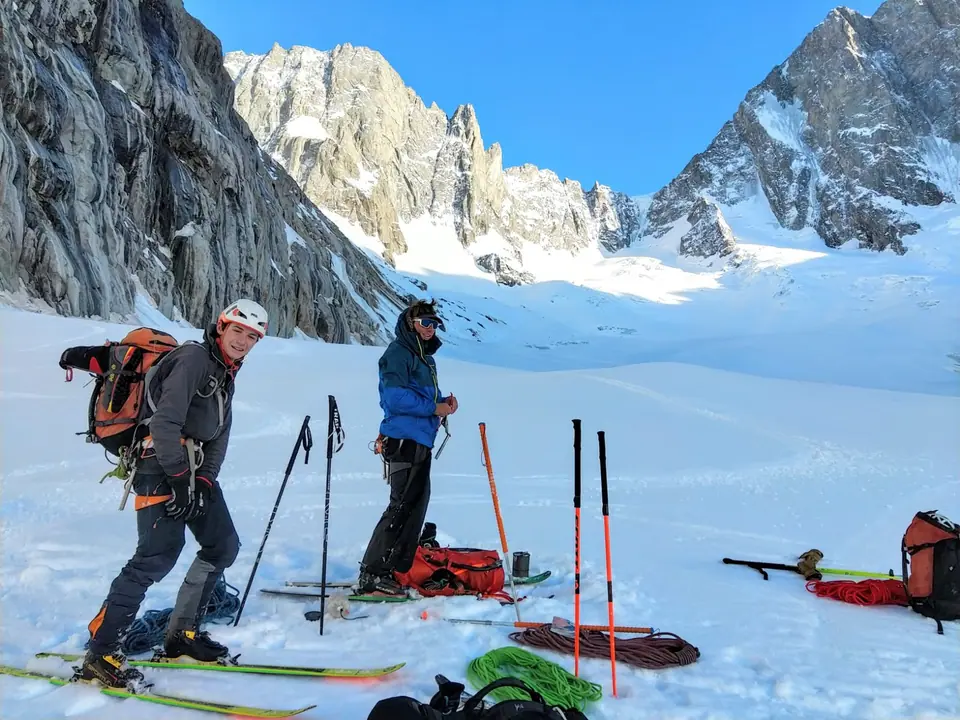
On the way up, your skis stay on the snow: you slide them forward, one step at a time. Three things make that possible:
touring bindings: the heel is free on the climb, then locks down for the descent;
skins: strips of fabric with an adhesive side, stuck under the skis, which glide forward and grip backwards;
touring boots, with a walk mode for the climb.
At the top, you take the skins off and lock your bindings and boots: that's the "transition". On steep slopes, you change direction with kick turns, which you learn on your first outing. Tours are measured in vertical gain, the metres you climb.
How good a skier do you need to be for ski touring?
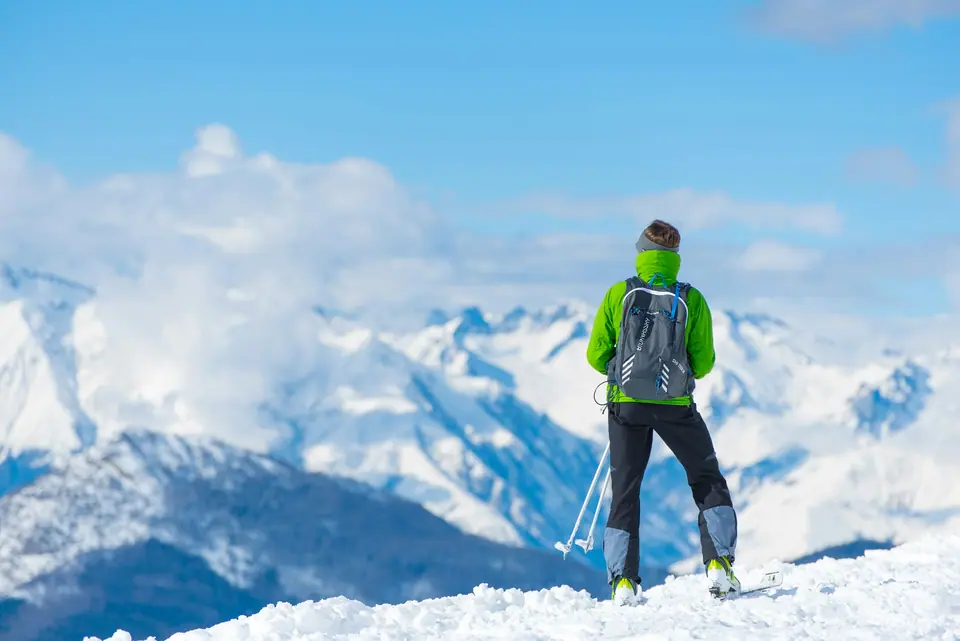
You need to be able to ski before you learn to climb. The valley's schools are clear about it:
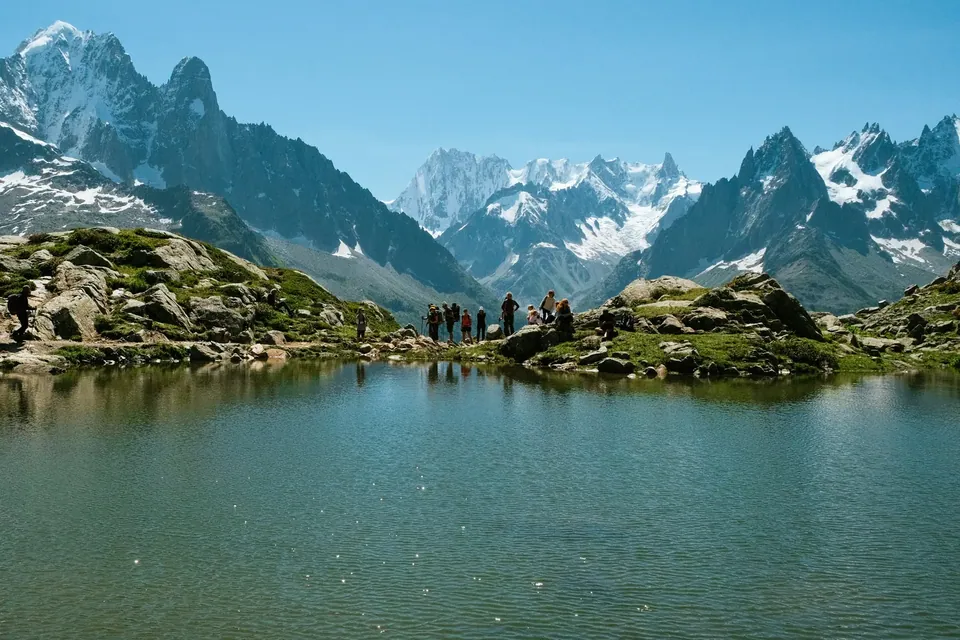
the Compagnie des Guides de Chamonix, the valley's historic guiding company, tailors its ski touring day to your level and recommends the Lac Blanc area (Col des Dards, Col du Belvédère) for a first outing;
the ESF (École du Ski Français) in Chamonix asks you to be comfortable off-piste;
the tourist office points out that you need to be able to ski all types of snow.
If you've never skied off the groomed pistes, book a few hours with an instructor in ungroomed snow first: our guide to ski lessons in Chamonix helps you choose.
Fitness-wise, the climb is an endurance effort. If you run or hike a lot in summer, you start with an advantage, as our article on ski touring and trail running explains.
What kit do you need, and where can you hire it in Chamonix?
You don't need to buy anything for your first tour: everything can be hired in the valley.
touring skis with touring bindings;
skins cut to the width of your skis;
ski crampons (couteaux in French, sometimes called harscheisen): blades that clip under the binding and bite into hard snow on traverses;
touring boots and poles;
a rucksack with the avalanche trio: transceiver, shovel and probe.
The transceiver (DVA in French, often called a beacon) sends a signal throughout the tour. After an avalanche, the others switch to search mode to find the buried person, pinpoint them with the probe and dig them out with the shovel. It only works if everyone carries the kit and knows how to use it.
Several shops in Chamonix hire out ski touring packages and safety kit: ask whether skins and ski crampons are included. With the Compagnie des Guides, the harness, transceiver, shovel and probe are included in the price of the introduction.
Can you skin up the pistes in Chamonix?
Yes, but not at any time. Walking or skinning up the pistes while the lifts are running is forbidden. Instead, the valley has marked uphill routes, notably on the Les Houches, Grands Montets and Balme ski areas, according to the tourist office.
Les Houches: the route climbs from the bottom of the resort to the top of the Prarion gondola, at 1,860 m, about 800 m of vertical. It is usually open from mid-December to late March, and the starting point depends on the time of day: check the dates, times and start on the tourist office website. Allow 1 to 3 hours depending on your fitness.
Le Tour: the route starts in the village, at the bottom of the Charamillon gondola, and follows the Caisets piste up to Charamillon, from 1,462 m to 1,850 m, just under 400 m of climbing. According to the tourist office, it can usually be used from mid-December to early April, at the times posted at the start. It's marked, but neither maintained nor made safe.
Grands Montets: the route from Argentière towards Lognan is longer, rated intermediate by the hire shop Sanglard Sports.
Marked or not, these routes are still in the mountains: carry a transceiver, shovel and probe, as the Le Tour listing asks. Once the ski area closes, the pistes are no longer patrolled: go with others, take a head torch and stick to the times posted at the start.
Where should you go on your first ski tour in Chamonix?
Off the pistes, go with a professional the first time: they choose the route according to the snow and that day's avalanche bulletin. Two beginner areas at the head of the valley, mentioned by the tourist office and route guides:
Le Tour and the Col de Balme. The tourist office lists a ski touring lift ticket, with a return trip to Charamillon and a one-way trip to the Col de Balme.
Aiguillette des Posettes, from Le Tour: about 750 m of climbing and 2 hours 30, rated easy by the French route site Altituderando, with slopes of up to 25°. The site Skitour rates it a little harder and warns of snow slides in the Grossailles couloir: one to do with a professional the first time.
Do you need a mountain guide or a ski instructor for ski touring?
The Chamonix tourist office recommends going with a guide: ski touring requires good knowledge of the mountains, starting with avalanche risk. In France, two professions can take you for payment:
a high mountain guide (guide de haute montagne, the IFMGA/UIAGM qualification), on all terrain, glaciers included;
a ski instructor (moniteur de ski) holding the French state diploma, off-piste and touring, except on unmarked glacier areas and mountaineering terrain. The ESF in Chamonix runs touring outings with its instructors, and with an instructor who is also a guide for glacier areas.
A mountain leader (accompagnateur en montagne, the International Mountain Leader qualification) leads snowshoeing, not skiing. For the full picture, see mountain guide vs mountain leader vs ski instructor.
From your first outing, the professional shows you how to fit skins, set a steady uphill track, manage kick turns and transitions, use your transceiver and choose where to go. Ask to see their professional card (carte professionnelle d'éducateur sportif): it's compulsory for anyone teaching or guiding for payment in France.
What goes into the price of a ski touring introduction in Chamonix?
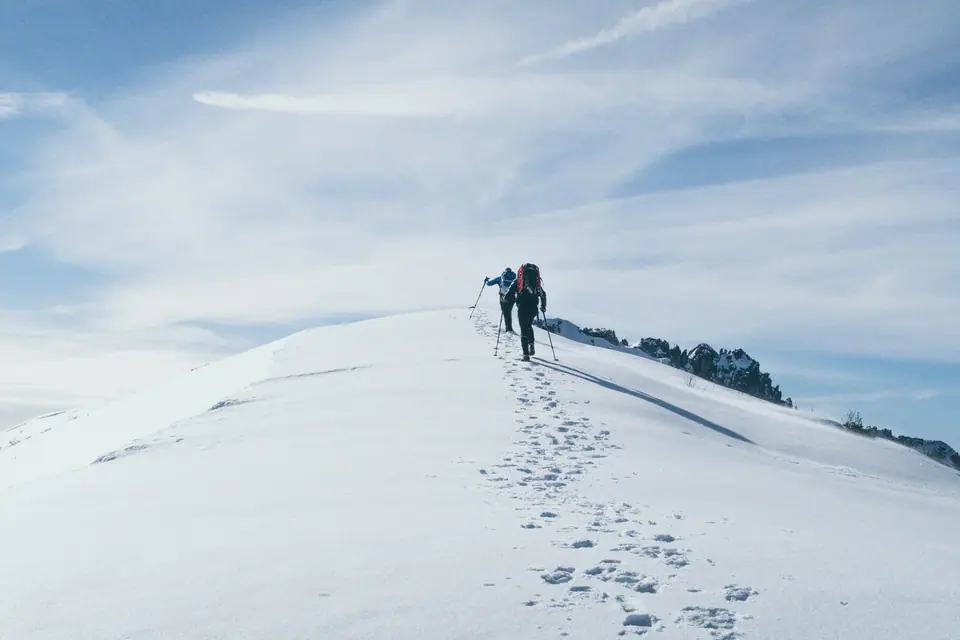
The price depends on the format (group or private, half-day, full day or two days) and on group size. Current prices are on each provider's website. The main options:
Group day, Compagnie des Guides: guaranteed from 3 people, mountain guide and safety kit included.
Private day, Compagnie des Guides: for 1 to 6 people, with a price that depends on group size.
Private 4-hour half-day, ESF Chamonix: for 1 to 6 people (one rate for 1 to 3, another for 4 to 6), in the morning or the afternoon; a full day is also available.
Two days in the Italian Val Ferret, Compagnie des Guides: based on 4 participants, mountain hut with half board included.
Usually not included: ski and boot hire, and lift tickets. Privately, you pay for the outing rather than a place: the more of you share it, the less each person pays.
How do you manage avalanche risk in Chamonix?
Every day in season, Météo-France publishes the avalanche bulletin, the BERA (bulletin d'estimation du risque d'avalanche), with risk rated from 1 to 5; Chamonix falls under the Mont Blanc massif. Read it before every outing, even on a marked route.
La Chamoniarde, the valley's mountain safety and rescue association, provides transceiver training parks on the ski areas, free to use. It also runs half-day workshops with a high mountain guide, covering transceiver search, probing, digging and first care of the victim.
Don't leave the marked routes without training or a professional. Even on an easy tour, there's no such thing as zero risk.
How do you find your pro on PEAKED?
Browse the valley's professionals in the PEAKED directory, and message the pro from their profile: they reply with their availability. Each one is accepted only after their diploma, professional card and insurance have been checked.
What should you remember before your first ski tour?
Level: confident on skis, with some off-piste experience.
Kit: touring skis and bindings, skins, ski crampons, touring boots, transceiver, shovel and probe, all available to hire.
Practice: the marked uphill routes at Les Houches (about 800 m) and Le Tour (just under 400 m), from mid-December to late March or early April.
Rule: no skinning up open pistes, except on the marked routes.
Who to go with: an IFMGA mountain guide, or a French-qualified ski instructor away from glacier areas.
Price: depends on the format (group or private, half-day or full day) and group size; hire and lift tickets are usually extra.
Safety: read the BERA before every outing and practise with your transceiver.
Frequently asked questions
Can I go ski touring if I've never skied off-piste?
The valley's schools ask for some experience: the Compagnie des Guides aims its introduction at people who ski a little off-piste, and the ESF in Chamonix asks you to be comfortable off the pistes. If that's not you yet, a few hours of lessons in ungroomed snow will prepare you. You can also try the climb on a marked route, then ski back down the pistes.
What goes into the price of a ski touring lesson in Chamonix?
It depends on the format. In a group, you pay for a place; privately, you pay for the professional's half-day or day, at a rate that depends on group size and that you share between you. Length matters too: half-day, full day or two days with a night in a hut. Safety kit is included with the Compagnie des Guides; ski hire and lift tickets are extra. Current prices are on each provider's website.
Are the marked uphill routes safe?
Not entirely. According to the tourist office, the Le Tour route is marked but neither maintained nor made safe. Carry a transceiver, shovel and probe, read the avalanche bulletin before you go and stick to the times posted at the start.
Can I skin up the pistes in the evening?
Not while the lifts are running, except on the routes designed for it. At Les Houches, the starting point of the route depends on the time of day: check it on the tourist office listing. After closing, the pistes are no longer patrolled, so go with others and take a head torch.
What kit is provided on a guided introduction?
It depends on the professional. With the Compagnie des Guides, the harness, transceiver, shovel and probe are included in the price, while skis, skins and boots are hired separately. Ask when you book so you know what to hire the day before.
When is the ski touring season in Chamonix?
The marked routes usually open from mid-December to late March or early April, depending on snow: check the dates on the tourist office website. Away from the marked routes, the snow and the avalanche bulletin decide, and your guide or instructor picks the day and the route.
Outings to discover
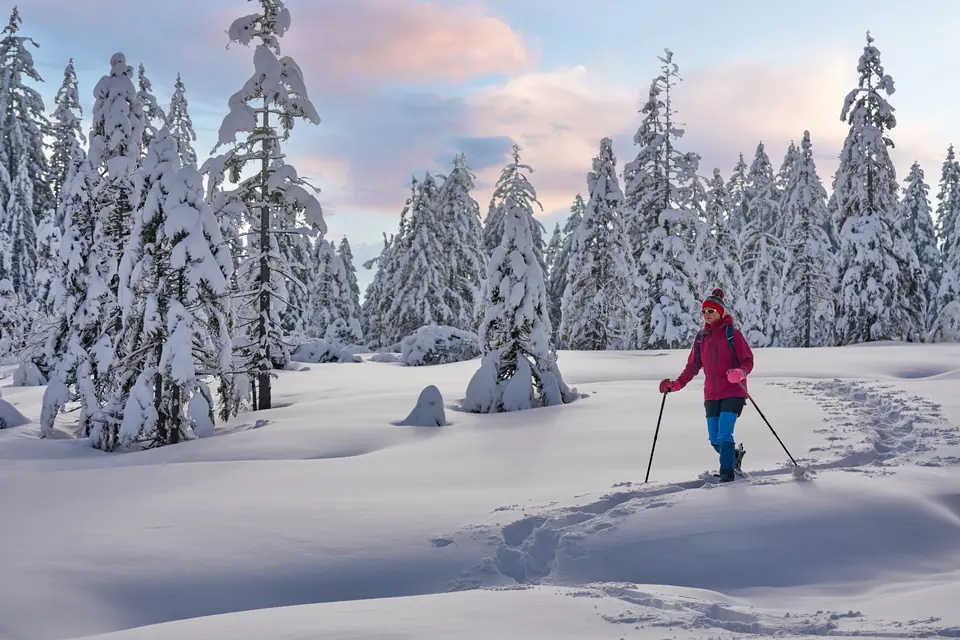 Snowshoeing
Chamonix-Mont-Blanc · Northern Alps
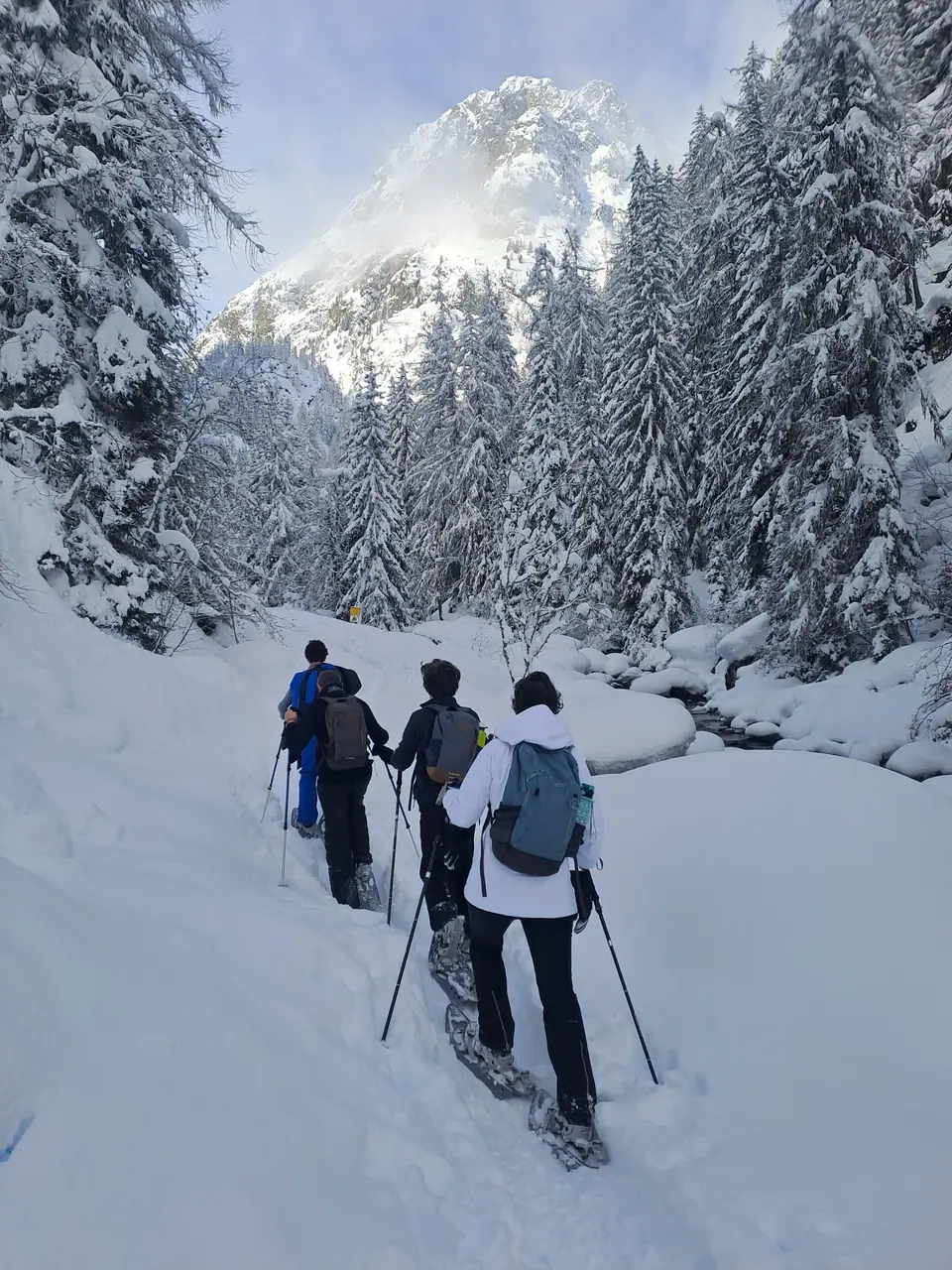
Snowshoe Hikes with Views of Mont Blanc *Private Outing*
€275 for 1 to 12 people
From
17 Nov
 Snowshoeing
Chamonix-Mont-Blanc · Northern Alps
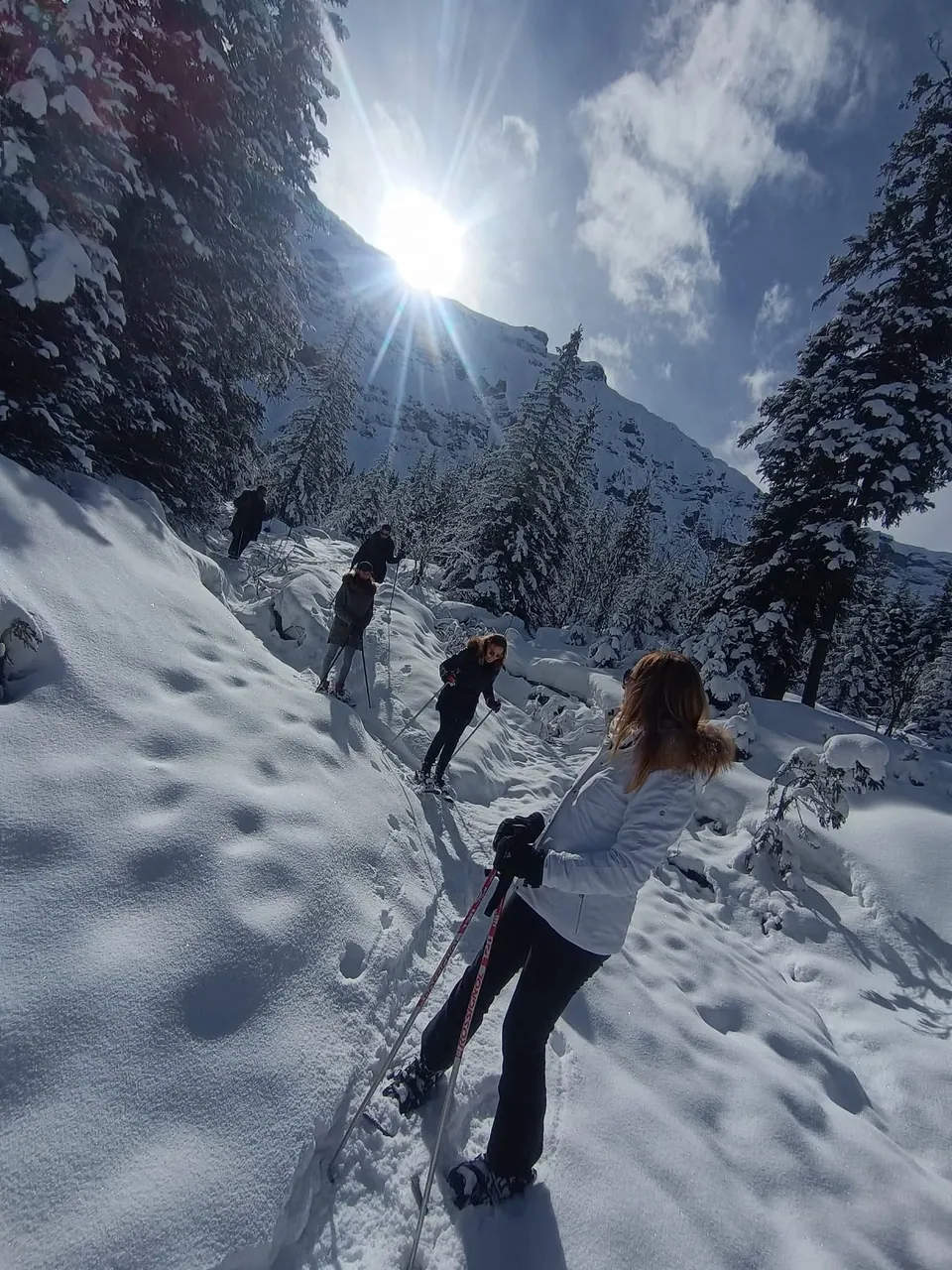
Snowshoeing Under the Stars *Private Group Outing*
€297 for 1 to 12 people
From
17 Nov
 Snowshoeing
Chamonix-Mont-Blanc · Northern Alps
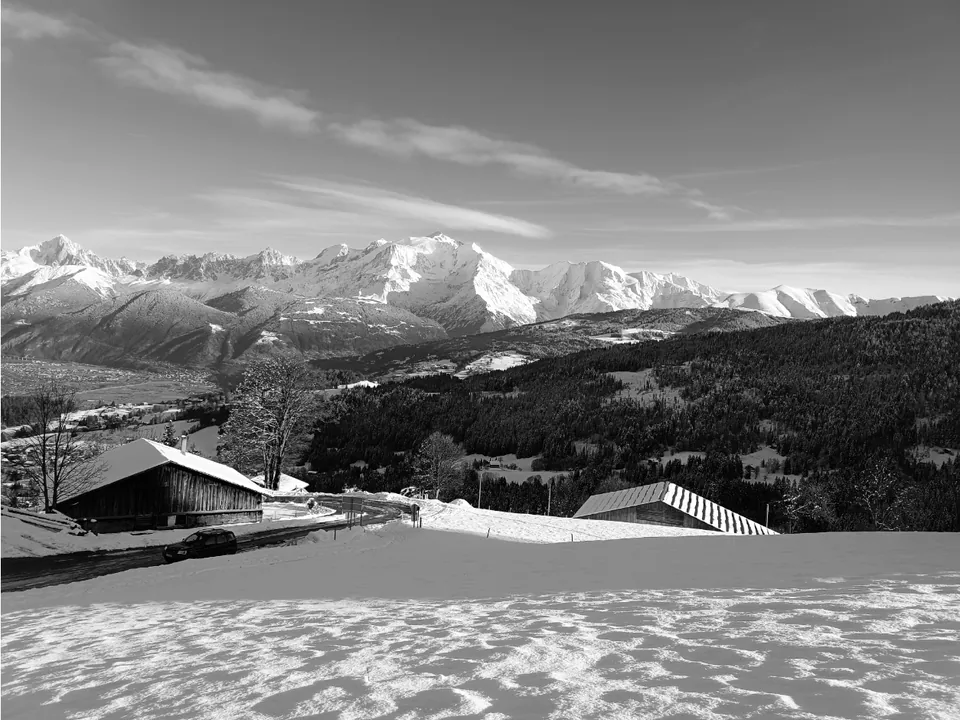
Searching for an avalanche victim
From €59 / person
From
5 Dec
 Snowshoeing
Megève · Northern Alps
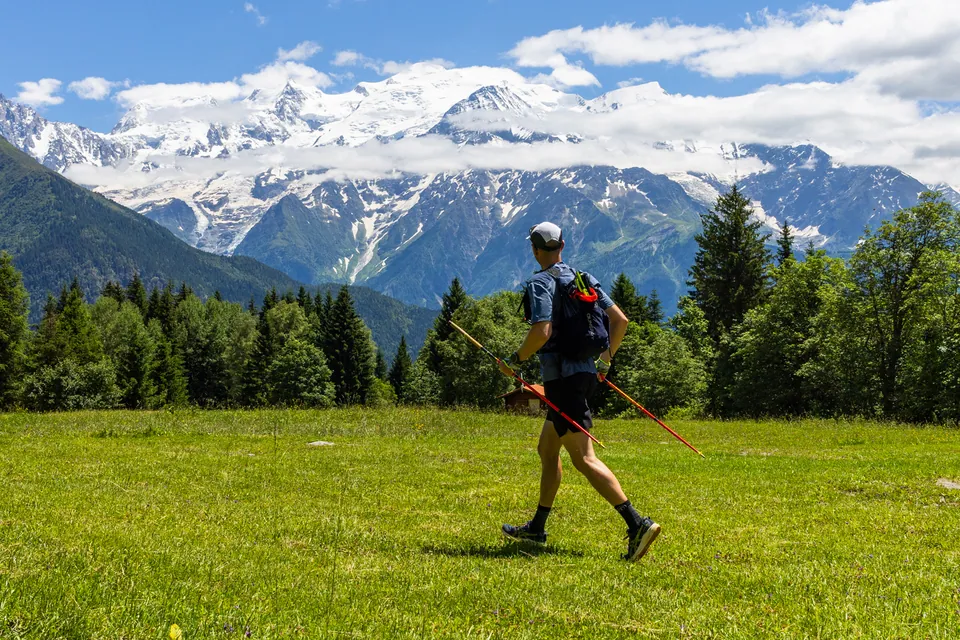
Winter in the mountains
From €57 / person
From
5 Dec
 Trail running
Chamonix-Mont-Blanc · Northern Alps
Half-day trail running in the Pays du Mont-Blanc
From €99 / person
From
1 May
 Hiking
Chamonix-Mont-Blanc · Northern Alps
Discover the ecosystems of our mountains
From €53.90 / person
From
17 Nov
 Snowshoeing
 Alpine skiing
Chamonix-Mont-Blanc · Northern Alps
Vallée Blanche ski descent with a mountain guide
€611.60 for 1 to 4 people